Your roof just weathered another intense Texas Panhandle storm, and now you're staring at damaged shingles, exposed decking, or worse. The question keeping you awake isn't just about the immediate repair costs—it's whether patching up the damage is throwing good money after bad. In Amarillo's unforgiving climate, where wind uplift forces can exceed 90 mph and hail stones reach golf ball size, making the wrong decision could mean facing catastrophic moisture intrusion during the next storm season. Every day you delay increases the risk of secondary damage that transforms a manageable repair into a complete building envelope failure.
When Storm Damage Requires Professional Attention
Not every storm leaves obvious damage, but the Texas Panhandle's extreme weather creates unique failure patterns that demand professional assessment. Membrane seams on flat or low-slope roofs can separate under thermal stress without visible signs from ground level. Granule loss on asphalt shingles may appear cosmetic but actually compromises the material's UV protection and thermal reflectivity.
Critical indicators that require immediate professional evaluation include:
- Missing or displaced shingles, especially on corners and edges where wind uplift is strongest
- Exposed fasteners or torn flashing around penetrations
- Interior water stains or dripping, indicating compromised vapor barriers
- Granule accumulation in gutters exceeding normal weathering patterns
- Visible deck boards or structural elements
According to the Insurance Institute for Business & Home Safety, even minor storm damage can accelerate deterioration in high-wind environments. What appears as a small repair today could become a complete roof replacement within 12-18 months if not properly addressed. To understand your specific damage patterns, see our hail and wind damage repair page for detailed assessment criteria.
Key Decision Factors: Repair vs. Replacement Analysis
The repair-versus-replacement decision hinges on four critical factors that savvy property owners must evaluate together, not independently. First, consider the lifecycle cost analysis beyond the immediate repair estimate. A roof approaching 15-20 years old with storm damage may cost $8,000-12,000 to repair, but replacement costs of $18,000-25,000 provide 25-30 years of protection with improved R-value and energy performance.
Age and Existing Condition: If your roof is over 15 years old and shows widespread granule loss, thermal cycling damage, or previous repair patches, replacement typically offers better long-term value. Newer roofs with isolated damage often justify targeted repairs, especially when the existing system meets current wind resistance standards.
Damage Extent and Pattern: Scattered damage across multiple roof planes indicates systemic failure requiring replacement. Localized damage to a single section or slope may warrant repair if the remaining roof system maintains structural integrity and weather resistance.
Insurance Considerations: Many insurance policies provide full replacement coverage when damage exceeds 25-30% of the roof area. Working with experienced contractors who understand insurance requirements ensures you maximize your coverage while meeting all documentation requirements.
Future Storm Resilience: Repairs using like-kind materials maintain existing vulnerability levels. Replacement allows upgrading to impact-resistant shingles, enhanced underlayment systems, and improved fastening patterns that exceed current building codes for wind resistance.
Material and System Recommendations for Texas Panhandle Conditions
Choosing the right materials for repair or replacement directly impacts your roof's ability to withstand future Panhandle storms. For replacement projects, impact-resistant Class 4 shingles from manufacturers like GAF or Owens Corning provide superior hail resistance while maintaining thermal reflectivity essential for our extreme heat conditions.
The underlayment system deserves equal attention to the visible roofing material. Synthetic underlayments offer better tear resistance and UV stability compared to traditional felt, crucial for installations that may be exposed during extended construction periods. Enhanced underlayments with self-sealing properties around fasteners create additional protection against moisture intrusion.
For commercial applications, TPO and EPDM membrane systems with mechanically attached insulation provide excellent wind uplift resistance. The Cool Roof Rating Council certifies these systems for energy efficiency, helping offset replacement costs through reduced cooling expenses.
Ventilation upgrades during replacement projects address thermal cycling stress that contributes to premature failure. Ridge vents combined with soffit ventilation create proper airflow patterns that extend material lifespan and improve energy performance. Explore our commercial roofing services page for detailed specifications on ventilation requirements for different building types.
What to Expect During the Repair or Replacement Process
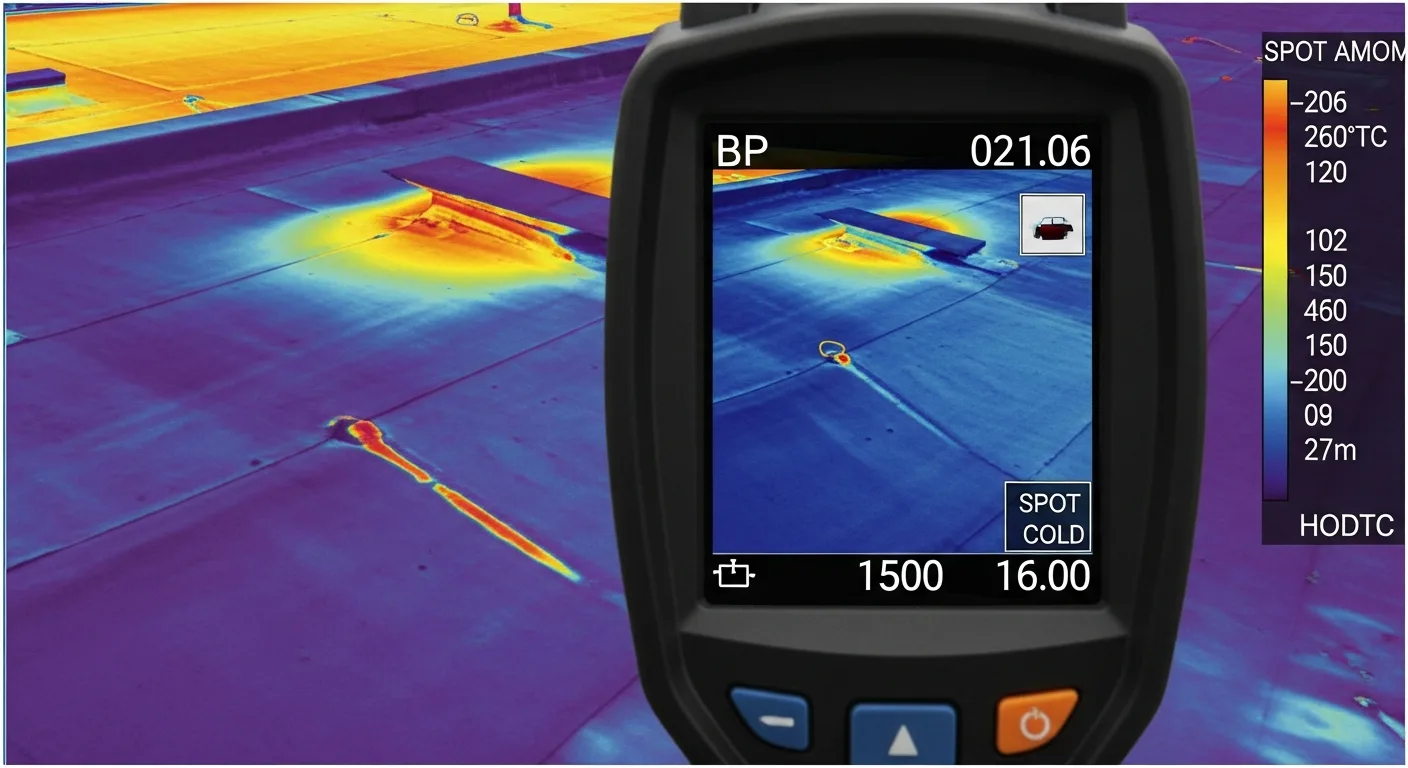
Professional storm damage assessment begins with comprehensive documentation using drone technology and thermal imaging to identify hidden moisture intrusion. This process typically takes 2-4 hours for residential properties and provides detailed reports suitable for insurance claims and project planning.
For repair projects, expect 1-3 days of work depending on damage extent and weather conditions. Quality contractors protect your property with tarping systems and schedule work to minimize weather exposure. Material matching becomes critical to maintain warranty coverage and aesthetic consistency.
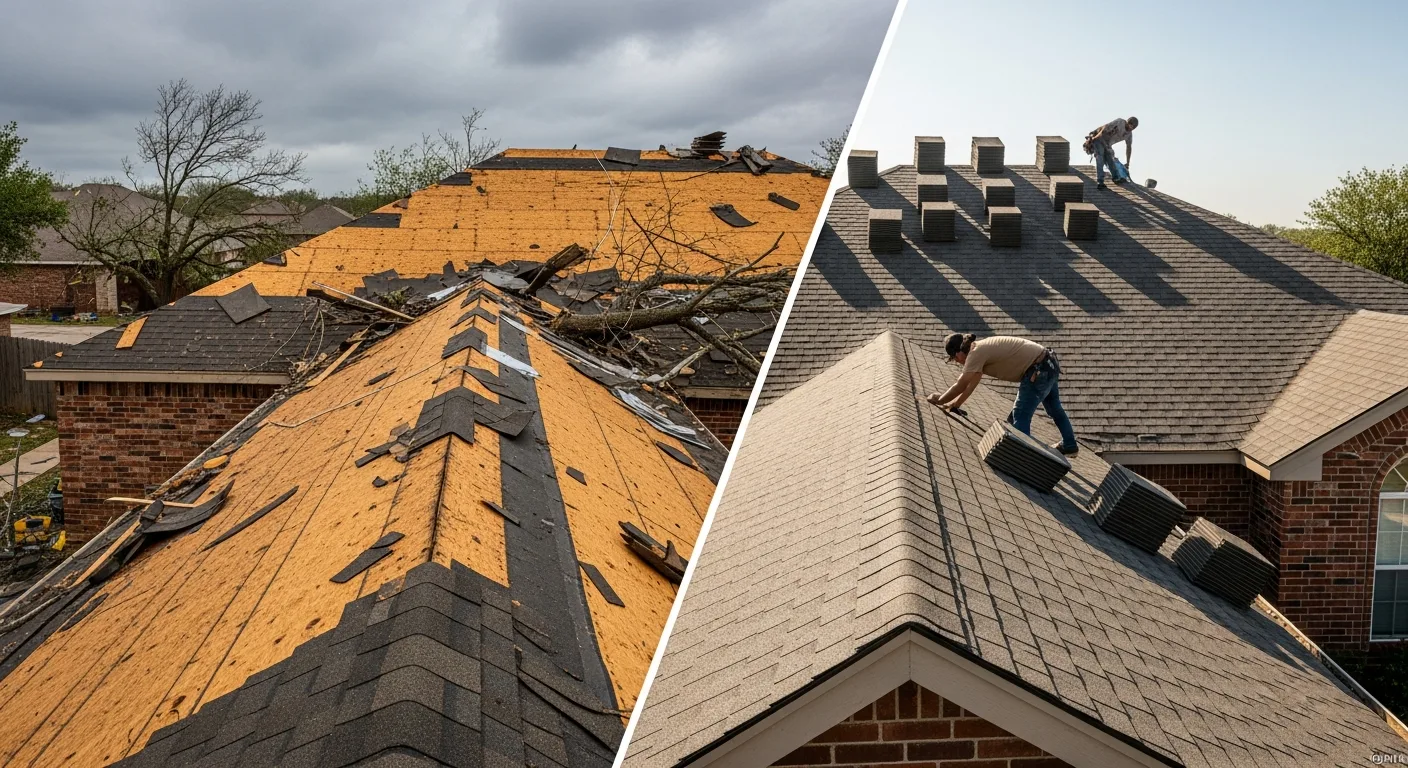
Complete replacement projects require 3-7 days for residential properties, with additional time for commercial applications. The process includes:
- Complete tear-off and debris removal with magnetic cleanup
- Deck inspection and repair of any structural damage
- Installation of enhanced underlayment and ice/water barriers
- Systematic installation following manufacturer specifications
- Final inspection and cleanup with warranty documentation
Weather contingency planning ensures project completion despite typical Panhandle wind patterns. Professional contractors maintain flexibility in scheduling while protecting partially completed work from precipitation and debris.
Why Choosing the Right Contractor Matters for Storm Damage
Storm damage restoration requires specific expertise beyond general roofing knowledge. Contractors must understand insurance requirements, emergency protection procedures, and accelerated installation techniques that maintain quality standards under time pressure. The wrong choice can void manufacturer warranties, create insurance claim complications, and leave your property vulnerable to future storms.
Qualified storm damage specialists maintain relationships with material suppliers that ensure availability during high-demand periods following major weather events. They understand local building codes and inspection requirements that affect project timelines and final approval.
Look for contractors with:
- Manufacturer certifications from major suppliers like CertainTeed and GAF
- Insurance restoration experience with documented claim success rates
- Local references from recent storm restoration projects
- Proper licensing, bonding, and insurance coverage
- Emergency response capabilities for temporary protection
The National Roofing Contractors Association emphasizes that proper installation techniques matter more than material selection for long-term performance. Even premium materials fail prematurely when installed by inexperienced contractors who don't understand building envelope integration requirements.
Don't let another storm season arrive with a compromised roof system. CRS Roofing & Construction has protected Texas Panhandle properties through countless severe weather events, combining advanced materials with proven installation techniques that exceed manufacturer standards. Our certified technicians provide comprehensive damage assessment, insurance claim support, and emergency protection services that minimize your risk and maximize your investment. Contact us today for your free storm damage evaluation and discover why property owners across Amarillo trust us with their most critical building envelope protection. Schedule your inspection now and secure your property before the next severe weather event tests your roof's integrity.
The Texas Panhandle's extreme climate presents unique challenges that go beyond typical storm damage assessment. According to National Weather Service data, the region experiences some of the most severe hail activity in the United States, with supercells regularly producing hail exceeding 2 inches in diameter. This creates impact forces that can compromise even impact-resistant shingles rated for Class 4 hail, requiring specialized assessment techniques to identify micro-fractures and mat delamination that may not be immediately visible.
Wind damage assessment becomes particularly critical when considering the region's exposure to straight-line winds and tornado activity. The National Wind Institute at Texas Tech University has extensively documented how wind uplift forces in the Panhandle can create cascading failures, where initial edge damage propagates across entire roof sections. Modern building codes require asphalt shingles to meet ASTM D3161 wind resistance standards, but older roofing systems may not have adequate fastener patterns or edge securement to withstand sustained winds above 60 mph.
Temperature extremes add another layer of complexity to damage assessment in Amarillo's climate. Summer temperatures regularly exceed 100°F, creating thermal cycling that can accelerate the deterioration of storm-damaged materials. Advanced shingle technologies like GAF's Timberline series incorporate LayerLock technology specifically designed to resist thermal movement, but even these premium materials can fail prematurely when compromised by hail impact or wind uplift.
Professional assessment becomes essential because secondary damage often exceeds the cost of initial storm damage. The National Roofing Contractors Association emphasizes that moisture intrusion through compromised roof systems can lead to structural decay, mold growth, and insulation failure within 72 hours of water penetration. In the Panhandle's low-humidity environment, homeowners may not notice interior moisture problems until significant structural damage has occurred.
When evaluating commercial flat roof systems common in Amarillo's industrial sectors, membrane integrity becomes the primary concern. TPO and EPDM systems can experience seam separation and punctures that require specialized detection equipment. Insurance Institute for Business & Home Safety research demonstrates that proactive maintenance and immediate post-storm assessment can reduce total loss claims by up to 40% compared to reactive approaches.