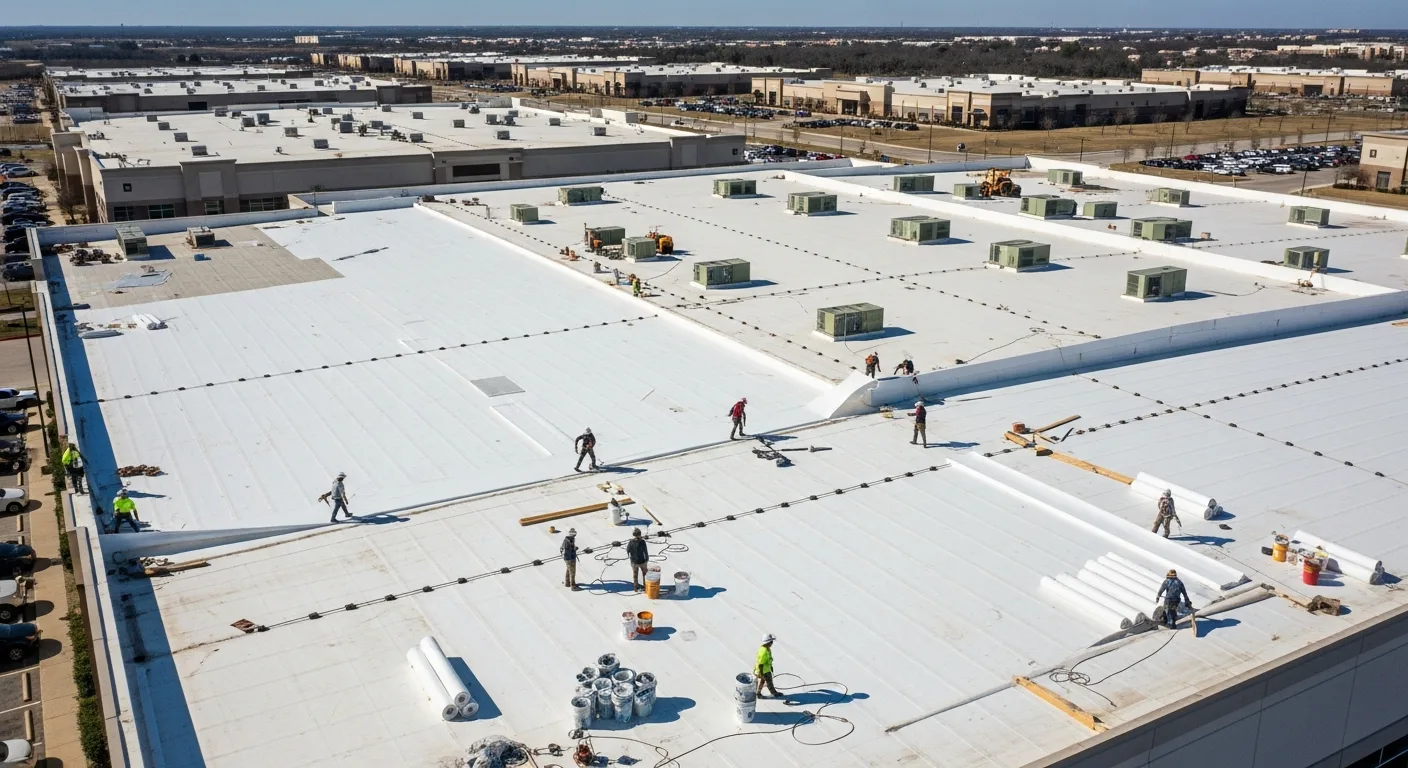
EPDM Roofing Systems: Superior Rubber Membrane Solutions for Texas Panhandle Commercial Properties
When Amarillo's commercial property owners face the relentless challenges of Texas Panhandle weather—from baseball-sized hail storms to scorching 100°F+ summers and sudden winter freezes—they need roofing systems engineered for extreme resilience. EPDM roofing systems have emerged as the gold standard for commercial flat and low-slope roof applications throughout the region, delivering unmatched durability against our area's notorious weather patterns.
Ethylene Propylene Diene Monomer (EPDM) roofing represents one of the most proven and reliable commercial roofing solutions available today. At CRS Roofing & Construction, we've installed and maintained hundreds of EPDM membrane systems across Amarillo, Canyon, Hereford, Borger, Pampa, Dumas, and Dalhart, witnessing firsthand how this synthetic rubber roofing technology stands up to the unique demands of Texas Panhandle commercial buildings.
The synthetic rubber roofing composition of EPDM makes it exceptionally well-suited for our region's extreme temperature fluctuations. While other roofing materials may crack, split, or deteriorate under the constant expansion and contraction caused by our dramatic seasonal changes, EPDM maintains its flexibility and waterproofing integrity year after year. This resilience becomes critical when considering that Amarillo experiences some of the most severe hail events in the nation, with storms capable of producing softball-sized hail that can devastate inferior roofing systems.
Our expertise extends beyond simple installation—we understand the specific membrane specifications, attachment methods, and detailing requirements that ensure optimal performance in high-wind environments where gusts regularly exceed 60 mph. From the historic Wolflin neighborhood's mid-century commercial buildings to the modern industrial complexes near Civic Circle, we've helped property owners protect their investments with properly engineered EPDM roofing solutions that address both immediate weather protection needs and long-term performance expectations.
Understanding EPDM Roofing Technology and Membrane Specifications
EPDM roofing systems utilize a synthetic rubber membrane composed of ethylene, propylene, and a small amount of diene monomer, creating a thermoset material that exhibits remarkable weather resistance and longevity. The membrane is manufactured in large sheets, typically ranging from 7.5 feet to 50 feet wide and up to 200 feet long, allowing for minimal seams and reduced potential leak points across commercial roof surfaces.
The EPDM membrane itself comes in two primary thicknesses: 45 mil and 60 mil, with the heavier gauge recommended for high-traffic areas or roofs subject to extreme weather conditions like those common throughout the Texas Panhandle. The material's molecular structure provides inherent resistance to ozone, ultraviolet radiation, and temperature extremes, making it ideally suited for our region's intense solar exposure and dramatic weather variations.
Installation methods for EPDM systems include fully adhered, mechanically attached, and ballasted applications. In Amarillo's high-wind environment, we typically recommend fully adhered systems using specially formulated adhesives that create a monolithic bond between the membrane and the roof deck. This approach provides superior wind uplift resistance, crucial for withstanding the 70+ mph winds that frequently accompany our severe thunderstorms.
The seaming process represents a critical aspect of EPDM installation, utilizing either tape or liquid adhesives to create watertight joints between membrane sheets. Our certified technicians employ NRCA-approved techniques and follow manufacturer specifications to ensure each seam meets or exceeds industry standards for wind uplift and water resistance. Proper edge detailing, penetration sealing, and flashing integration complete the weatherproof envelope essential for protecting commercial buildings from moisture intrusion.
Quality EPDM systems also incorporate appropriate insulation layers beneath the membrane, providing thermal performance that helps reduce energy costs while preventing condensation issues. In Texas Panhandle applications, we typically specify polyisocyanurate or expanded polystyrene insulation boards that complement the EPDM membrane's performance characteristics while meeting local energy code requirements.
Key Benefits and Performance Advantages of EPDM Roofing Systems
Exceptional Weather Resistance: EPDM roofing systems demonstrate superior performance against hail impact, a critical consideration for Texas Panhandle commercial properties. The rubber membrane's flexibility allows it to absorb impact energy without puncturing or cracking, protecting the underlying roof structure and building interior from hail damage that commonly affects more rigid roofing materials.
Temperature Stability: The synthetic rubber composition remains flexible across an impressive temperature range, from -40°F to 300°F, easily accommodating Amarillo's extreme seasonal variations. This flexibility prevents the thermal stress cracking that plague other roofing systems subjected to our region's dramatic temperature swings between scorching summers and freezing winters.
UV and Ozone Resistance: EPDM's molecular structure provides inherent protection against ultraviolet degradation and ozone exposure, both significant concerns in the high-altitude, intense-sunlight environment of the Texas High Plains. This resistance ensures membrane integrity and appearance retention throughout the system's service life.
Energy Efficiency Performance: White EPDM membranes offer excellent reflectivity, reducing cooling loads during Amarillo's extended summer periods when temperatures regularly exceed 95°F. The membrane's thermal performance, combined with appropriate insulation systems, can significantly reduce commercial building energy consumption and operational costs.
Proven Longevity: Properly installed EPDM roofing systems routinely provide 20-30 years of reliable service, with many installations exceeding their design life when maintained according to manufacturer recommendations. This longevity makes EPDM an excellent investment for commercial property owners seeking long-term roof performance.
Low Maintenance Requirements: EPDM systems require minimal ongoing maintenance compared to other commercial roofing options. Routine inspections and basic cleaning typically suffice to maintain system performance, though our comprehensive roof repair services ensure any issues are addressed promptly to prevent minor problems from becoming major concerns.
Our Professional EPDM Installation and Maintenance Process
CRS Roofing & Construction follows a systematic approach to EPDM installation that ensures optimal performance and longevity. Our process begins with comprehensive roof deck evaluation, checking for structural adequacy, proper slope, and any existing damage that requires attention before membrane installation.
Following deck preparation, we install the appropriate insulation system, ensuring proper R-values for Texas Panhandle climate conditions while maintaining the structural integrity required for wind uplift resistance. Our certified technicians then precisely position and adhere the EPDM membrane, paying careful attention to seam placement and edge details that could compromise system performance.
Each installation includes thorough quality control inspections at critical stages, with detailed documentation and testing to verify proper adhesion, seam integrity, and overall system performance. We conduct comprehensive final inspections using electronic leak detection methods when necessary, ensuring the completed installation meets our exacting standards.
Our maintenance programs include scheduled inspections designed to identify potential issues before they compromise building protection. These evaluations focus on membrane condition, seam integrity, drainage function, and penetration sealing—all critical elements for maintaining system performance in Amarillo's challenging weather environment.
Why Choose CRS Roofing for Your EPDM Roofing Project
CRS Roofing & Construction brings decades of specialized experience in Texas Panhandle commercial roofing, with extensive expertise in EPDM system design and installation. Our team holds manufacturer certifications from leading EPDM producers, ensuring installations meet warranty requirements while maximizing system performance.
We understand the unique challenges facing Amarillo-area commercial buildings, from extreme hail exposure to high-wind events and dramatic temperature variations. This local knowledge allows us to specify and install EPDM systems optimized for our regional conditions, providing superior long-term performance compared to generic approaches.
Our comprehensive approach to commercial roofing includes detailed project planning, precise material specifications, and thorough quality control measures that ensure each EPDM installation delivers maximum value and protection. We also offer flexible maintenance programs designed to preserve system performance throughout its service life.
From initial consultation through final inspection, our commitment to customer service and technical excellence sets us apart in the Texas Panhandle commercial roofing market. We provide detailed project documentation, warranty coverage, and ongoing support to protect your commercial property investment.
Frequently Asked Questions About EPDM Roofing Systems
How does EPDM compare to other commercial roofing options like TPO?
While both EPDM and TPO roofing systems offer excellent performance, EPDM provides superior flexibility and hail resistance, making it particularly well-suited for Texas Panhandle conditions. EPDM's proven track record spans decades, while TPO technology is newer but offers enhanced energy efficiency through reflective properties.
What is the expected lifespan of an EPDM roofing system in Amarillo's climate?
Properly installed and maintained EPDM systems typically provide 20-30 years of reliable service in Texas Panhandle conditions. The EPDM Roofing Association documents installations exceeding 40 years of service life, demonstrating the material's exceptional durability when properly specified and maintained.
Can EPDM roofing systems withstand the severe hail storms common in our region?
Yes, EPDM's flexible rubber composition provides excellent hail resistance compared to rigid roofing materials. The membrane's ability to flex under impact helps prevent punctures and cracks that commonly occur with other roofing systems during severe hail events.
What maintenance is required to keep an EPDM roof performing optimally?
EPDM systems require minimal maintenance, typically consisting of biannual inspections, debris removal, and occasional cleaning. We recommend professional inspections after severe weather events to identify any damage requiring prompt repair to maintain system integrity.
How does EPDM installation cost compare to other commercial roofing options?
While initial EPDM installation costs may be slightly higher than some alternatives, the system's exceptional longevity and low maintenance requirements typically provide superior long-term value. The reduced likelihood of weather-related repairs in our harsh climate often makes EPDM the most cost-effective choice over the building's lifecycle.