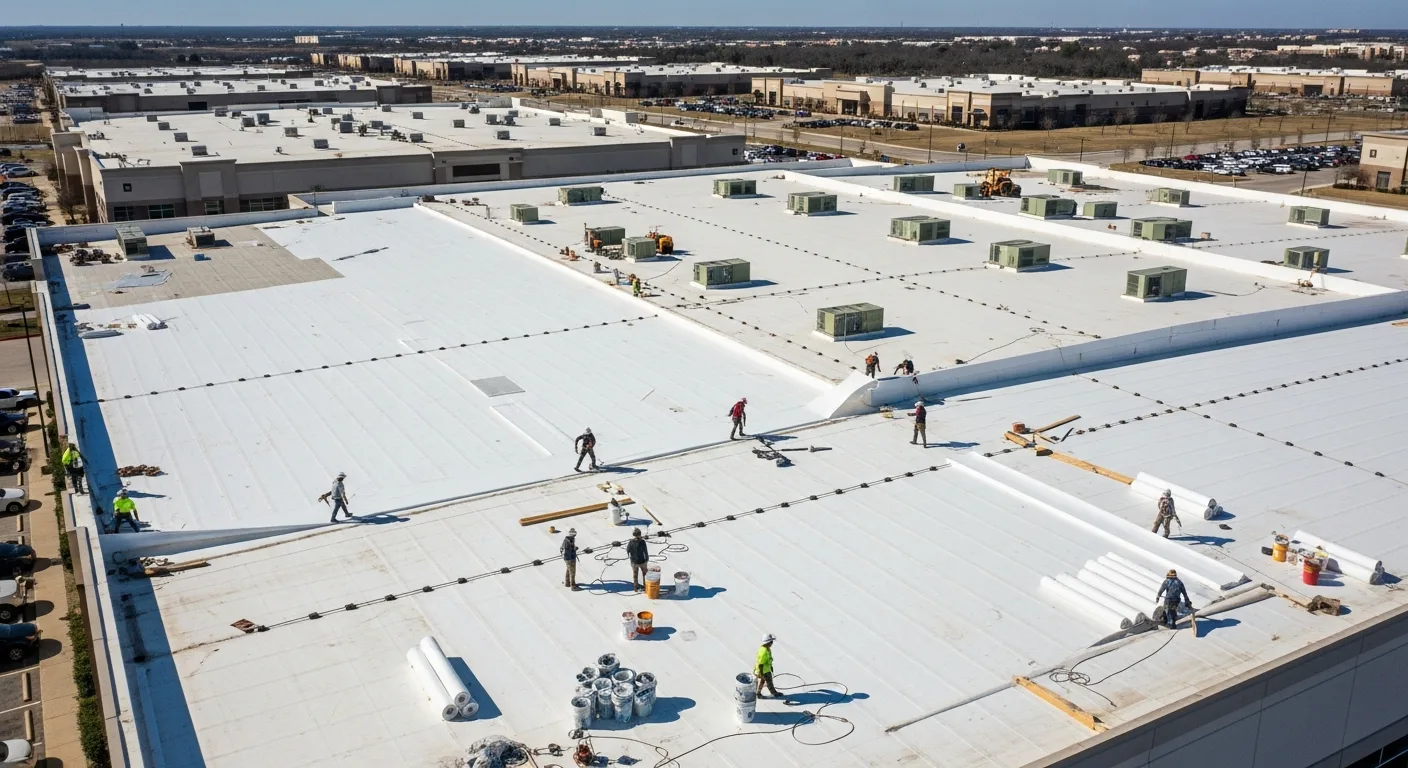
Hospital & Healthcare Facility Roofing Solutions in Amarillo, TX
Healthcare facilities across Amarillo and the Texas Panhandle face unique challenges that demand specialized roofing solutions designed to protect critical operations 24/7. From the sprawling BSA Health System campus to the numerous clinics serving Canyon, Hereford, Borger, Pampa, Dumas, and Dalhart, medical facilities cannot afford roofing failures that could compromise patient care, sterile environments, or life-saving equipment.
CRS Roofing & Construction understands that hospital roofing goes far beyond standard commercial applications. Our specialized approach to healthcare facility roofing addresses the stringent requirements of medical environments while withstanding the Texas Panhandle's extreme weather conditions. With baseball-sized hail storms striking regularly, sustained winds exceeding 60 mph, dramatic temperature swings from 100°F+ summers to sub-freezing winters, and relentless UV exposure year-round, healthcare facilities require roofing systems engineered for maximum durability and reliability.
The stakes couldn't be higher for medical center roofing projects. Operating rooms, intensive care units, pharmaceutical storage areas, and diagnostic imaging centers all depend on weathertight roofing systems that maintain controlled environments essential for patient safety and equipment protection. Our team specializes in clinic roofing solutions that meet The Joint Commission standards and American Society for Healthcare Engineering (ASHE) guidelines, ensuring your facility maintains accreditation while protecting your most valuable assets – your patients and staff.
Unlike typical commercial roofing contractors, we understand the complexities of working around active medical operations, coordinating with infection control protocols, managing noise restrictions during critical care hours, and maintaining emergency access routes. Our expertise in healthcare facility roofing spans from small urgent care clinics in rural Texas Panhandle communities to major hospital complexes requiring sophisticated membrane systems, emergency backup protocols, and specialized drainage solutions.
Understanding Healthcare Roofing Systems
Healthcare facility roofing demands specialized systems that go far beyond conventional commercial applications. Medical facilities require roofing solutions that address unique challenges including infection control, equipment vibration isolation, specialized drainage for medical waste systems, and integration with complex HVAC networks that maintain critical air pressure differentials throughout the facility.
Modern hospital roofing typically incorporates multi-layered membrane systems designed to provide redundant waterproofing protection. TPO roofing systems have become increasingly popular for healthcare applications due to their chemical resistance, heat-weldable seams, and compatibility with medical facility maintenance protocols. These thermoplastic polyolefin membranes offer superior resistance to the cleaning chemicals and disinfectants commonly used in healthcare environments while providing excellent puncture resistance against equipment installations.
Healthcare roofing systems must accommodate extensive mechanical equipment including multiple HVAC units, emergency generators, cooling towers, medical gas venting systems, and specialized exhaust fans for laboratory fume hoods and surgical suites. The roof structure must support concentrated loads while maintaining proper drainage around penetrations. Specialized curbing systems, equipment pads, and vibration isolation mounts are essential components that require expert installation to prevent membrane damage and maintain structural integrity.
Insulation requirements for medical facilities often exceed standard commercial specifications due to energy efficiency mandates and the need to maintain precise temperature control in areas like pharmaceutical storage, blood banks, and imaging centers. Polyisocyanurate and expanded polystyrene insulation systems provide the thermal performance necessary to support energy-efficient operations while meeting fire safety codes specific to healthcare occupancies. Vapor barriers and air barriers must be precisely installed to prevent condensation issues that could compromise indoor air quality or create conditions conducive to mold growth.
The National Roofing Contractors Association (NRCA) healthcare guidelines emphasize the importance of proper flashing systems around the numerous penetrations typical in medical facility roofs. Laboratory exhaust systems, medical gas venting, elevator penthouses, and emergency communication equipment all require specialized flashing details that maintain weathertight seals while allowing for thermal movement and equipment vibration.
Benefits & Advantages of Specialized Healthcare Roofing
Professional healthcare facility roofing delivers critical advantages that directly impact patient care quality and operational efficiency. Infection control compliance represents perhaps the most significant benefit, as properly designed roofing systems prevent moisture intrusion that could compromise sterile environments or create conditions for harmful microbial growth. Our roofing solutions support your facility's infection prevention protocols by maintaining weathertight barriers that protect sensitive medical environments.
Operational continuity benefits cannot be overstated for healthcare facilities. Unlike other commercial buildings that can temporarily relocate operations, hospitals and medical centers must maintain continuous service. Our specialized installation techniques minimize disruption to ongoing medical operations through phased construction schedules, noise control measures, and careful coordination with facility management to avoid interference with critical care areas.
Energy efficiency advantages deliver substantial operational cost savings for healthcare facilities with their intensive energy demands. Advanced insulation systems and reflective membrane technologies can reduce cooling costs by up to 30% during Amarillo's scorching summers, while maintaining the precise temperature control required for medical equipment, pharmaceutical storage, and patient comfort areas.
Long-term durability protects healthcare facility investments through roofing systems designed to withstand the Texas Panhandle's extreme weather conditions. Our membrane systems resist UV degradation, hail impact damage, and thermal cycling that can cause premature failure in standard roofing applications. This durability translates to lower lifecycle costs and reduced risk of emergency repairs that could disrupt medical operations.
Code compliance assurance ensures your facility meets all regulatory requirements including International Building Code healthcare provisions, NFPA life safety standards, and accreditation requirements from organizations like The Joint Commission. Our expertise in healthcare-specific building codes prevents costly compliance issues and supports your facility's accreditation processes.
Emergency preparedness support includes roofing systems designed to maintain integrity during severe weather events common to the Texas Panhandle. Reinforced attachment systems, impact-resistant materials, and emergency drainage provisions help ensure your facility can continue serving the community when disasters strike and medical services are most critically needed.
Our Healthcare Roofing Process
Our specialized healthcare roofing process begins with comprehensive facility assessment and stakeholder coordination to understand your unique operational requirements. We conduct detailed surveys of existing roof conditions, mechanical equipment layouts, and facility usage patterns to develop installation strategies that minimize disruption to patient care activities.
Pre-construction planning involves extensive coordination with facility management, infection control teams, and medical staff to establish work schedules that avoid interference with critical care areas, surgical procedures, and emergency operations. We develop detailed noise control plans, dust containment protocols, and emergency access procedures that maintain your facility's ability to provide uninterrupted medical services throughout the roofing project.
Installation proceeds through carefully orchestrated phases that prioritize weather protection and operational continuity. Our crews utilize specialized equipment and techniques designed for healthcare environments, including low-noise installation methods during critical care hours and advanced containment systems that prevent construction debris from entering sensitive medical areas.
Quality assurance measures include rigorous testing protocols that verify membrane integrity, drainage performance, and compliance with healthcare facility standards. We conduct comprehensive inspections at each installation phase, document all penetration details, and provide detailed warranty documentation that supports your facility's maintenance and compliance requirements.
Project completion includes comprehensive documentation delivery, facility staff training on roofing system maintenance requirements, and integration with your facility's preventive maintenance programs. We provide detailed operation and maintenance manuals specifically tailored to healthcare facility requirements and establish ongoing support protocols for future service needs.
Why Choose CRS Roofing for Healthcare Facilities
CRS Roofing & Construction brings specialized expertise in healthcare facility roofing that extends far beyond general commercial roofing capabilities. Our team understands the unique challenges of working in active medical environments and maintains certifications in healthcare construction safety protocols, infection control procedures, and specialized installation techniques required for medical facility applications.
Our local expertise in Texas Panhandle weather conditions ensures your healthcare facility receives roofing solutions specifically engineered for our region's extreme climate challenges. From the devastating hail storms that regularly impact the Amarillo area to the sustained high winds and dramatic temperature swings, we design and install roofing systems that protect your critical medical operations year-round.
We maintain comprehensive liability insurance coverage and bonding specifically tailored for healthcare facility construction projects. Our quality assurance programs meet or exceed industry standards established by ASHE and other healthcare facility organizations, ensuring your project delivers the reliability and performance your patients and staff deserve.
Our commitment to healthcare facility roofing extends to emergency roofing response capabilities and maintenance programs designed specifically for medical facilities. We understand that roofing emergencies in healthcare settings require immediate response to protect patient safety and prevent operational disruptions.
Frequently Asked Questions
How do you minimize disruption to ongoing medical operations during roofing projects?
We develop comprehensive coordination plans with facility management and medical staff to schedule work around critical care activities, surgical procedures, and emergency operations. Our installation techniques include noise control measures, dust containment systems, and phased construction schedules that maintain operational continuity throughout the project. We also maintain emergency response protocols to address any unexpected issues that could impact patient care areas.
What roofing systems are best suited for healthcare facilities in the Texas Panhandle?
Healthcare facilities in our region benefit most from multi-layered membrane systems such as TPO or EPDM that provide excellent weather resistance and chemical compatibility with medical facility cleaning protocols. These systems offer superior hail resistance, UV stability, and the ability to accommodate extensive mechanical equipment while maintaining weathertight seals around numerous roof penetrations typical in medical facilities.
How often should healthcare facility roofs be inspected and maintained?
Healthcare facilities should undergo professional roof inspections at least twice annually, with additional inspections following severe weather events common to the Texas Panhandle. ASHE guidelines recommend comprehensive preventive maintenance programs that include quarterly drainage system cleaning, semi-annual membrane inspections, and immediate attention to any penetration seal issues that could compromise the building envelope.
Do healthcare roofing projects require special permits or approvals?
Healthcare facility roofing projects typically require coordination with local building departments, fire safety officials, and potentially state health department oversight depending on the scope of work. We handle all permitting requirements and ensure compliance with healthcare-specific building codes, The Joint Commission standards, and any infection control protocols required by your facility's accreditation bodies.
What warranty coverage is available for healthcare facility roofing systems?
We provide comprehensive warranty coverage that includes both material and workmanship guarantees specifically tailored for healthcare facility applications. Our warranties typically extend 15-20 years for membrane systems and include provisions for emergency repair response, which is critical for healthcare facilities that cannot afford extended service disruptions. We also offer extended warranty options and maintenance agreements that support your facility's long-term operational requirements and budget planning needs.