Your commercial flat roof faces some of the harshest conditions in North America. The Texas Panhandle's extreme temperature swings—from scorching 110°F summers to sudden winter freezes—combined with devastating hailstorms and 70+ mph winds, create a perfect storm for roofing system failure. When your building envelope fails, you're not just looking at repair costs; you're facing potential inventory loss, business interruption, liability issues, and insurance claim complications that can devastate your bottom line.
The stakes are too high for guesswork. Making the wrong roofing system choice today could cost you tens of thousands in premature replacement, emergency repairs, and lost business revenue within just a few years. In Amarillo's climate, a subpar roofing decision isn't just expensive—it's business-threatening.
When Your Commercial Flat Roof Requires Professional Attention
Don't wait for visible leaks to start your roofing system evaluation. In the Texas Panhandle, moisture intrusion often begins long before you see water stains on ceiling tiles. Professional assessment becomes critical when you notice:
- Membrane bubbling or blistering from thermal stress cycles
- Ponding water that remains 48+ hours after rainfall
- Exposed fasteners or loose seams compromising wind uplift resistance
- Granule loss or surface deterioration reducing thermal reflectivity
- HVAC vibration damage around rooftop equipment
Energy costs climbing unexpectedly often signal compromised R-value from moisture-saturated insulation. With Amarillo's extreme heat island effect, even minor building envelope failures can spike cooling costs by 20-30%. The Department of Energy confirms that commercial buildings lose significant energy efficiency when roofing systems fail to maintain proper thermal performance.
Key Decision Factors for Commercial Flat Roofing Systems
Your roofing system selection must balance upfront investment against lifecycle cost analysis while addressing Amarillo's specific climate challenges. Consider these critical factors:
Climate Compatibility Assessment
Texas Panhandle conditions demand roofing systems engineered for extreme weather. Your membrane must withstand:
- Thermal cycling stress from 60-80°F daily temperature swings
- UV degradation from intense high-altitude sun exposure
- Impact resistance for baseball-sized hail events
- Wind uplift ratings exceeding 90 mph sustained winds
Total Cost of Ownership Analysis
Smart building owners evaluate 20-year lifecycle costs, not just installation prices. Premium systems with higher upfront costs often deliver superior ROI through:
- Extended warranty coverage (up to 30 years)
- Reduced maintenance requirements
- Energy savings from enhanced thermal reflectivity
- Insurance premium reductions for impact-resistant systems
Our commercial roofing services page details specific ROI calculations for different system types in Texas Panhandle applications.
Commercial Flat Roofing System Recommendations
Each roofing membrane technology offers distinct advantages for Amarillo's challenging environment. Here's how leading systems perform:
TPO (Thermoplastic Polyolefin) Systems
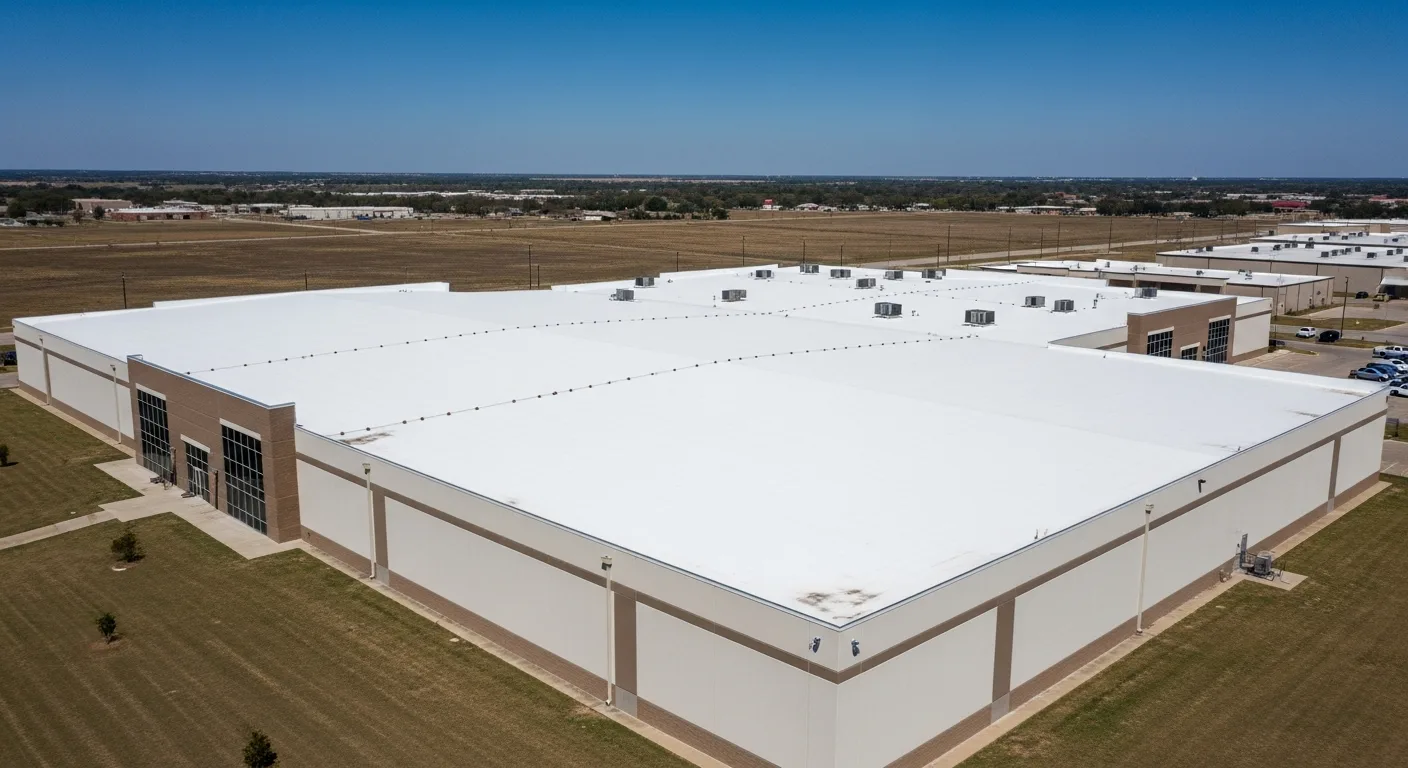
TPO membranes excel in high-heat applications, offering excellent thermal reflectivity and energy efficiency. Key benefits include:
- Heat-weldable seams providing superior wind uplift resistance
- White or light-colored surfaces reducing cooling loads by 10-15%
- Chemical resistance against common rooftop contaminants
- Recyclability supporting sustainable building practices
However, TPO requires careful contractor selection, as improper installation compromises membrane integrity. The NRCA emphasizes that TPO system performance depends heavily on proper seam welding and fastening patterns.
EPDM (Ethylene Propylene Diene Monomer) Systems
EPDM rubber membranes provide proven durability in extreme temperature conditions:
- Exceptional flexibility handling thermal expansion/contraction
- 40+ year track record in harsh climates
- Cost-effective installation for large commercial projects
- Easy repair procedures minimizing maintenance costs
Modified Bitumen Systems
Multi-ply modified bitumen offers enhanced puncture resistance and proven performance:
- Superior impact resistance for hail-prone areas
- Self-adhering options eliminating torch application risks
- Granulated surfaces providing UV protection
- Excellent cold-weather flexibility preventing cracking
What to Expect During the Commercial Roofing Process
Professional commercial roofing installation follows strict protocols ensuring system integrity and warranty compliance. Here's the typical timeline:
Phase 1: Comprehensive Assessment (1-2 weeks)
- Structural load calculations and building envelope analysis
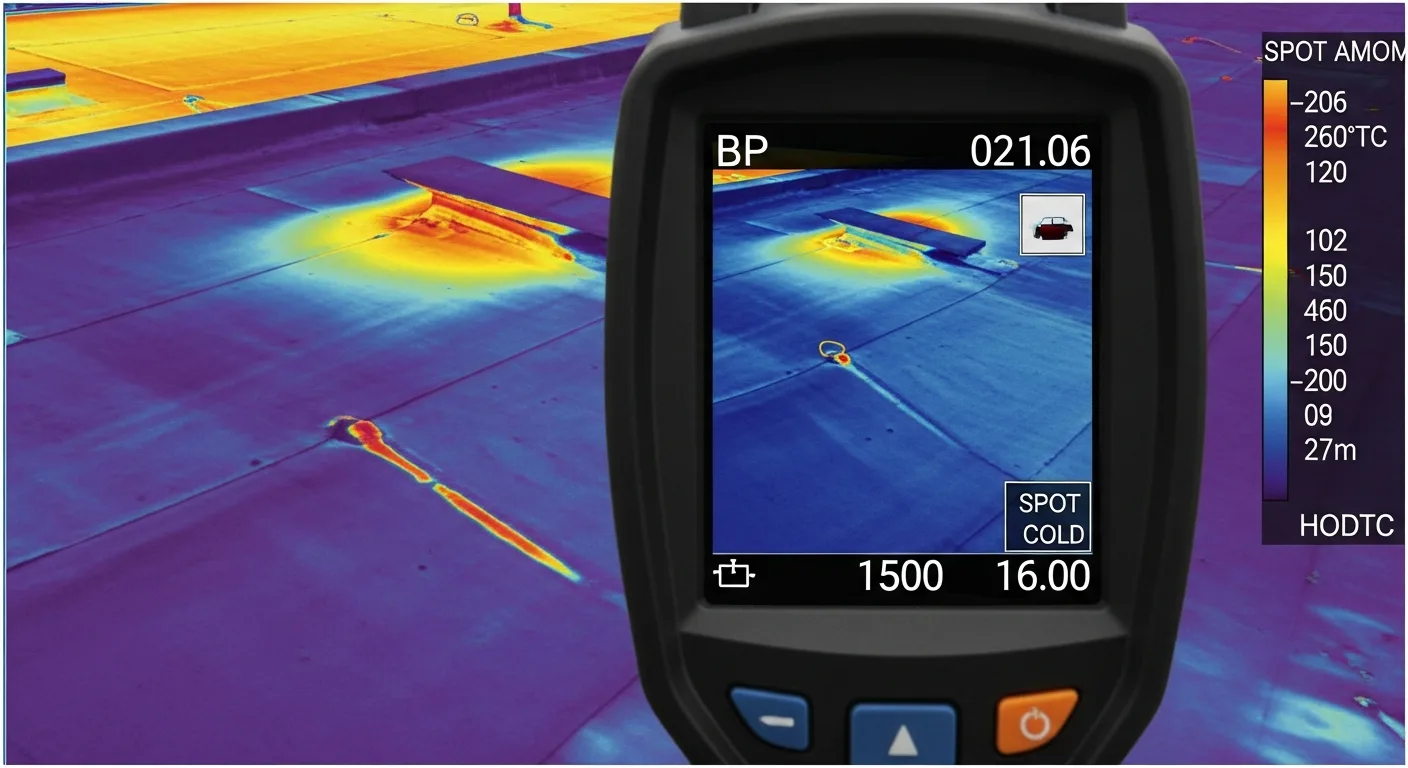
- Moisture surveys using infrared thermography
- Code compliance review and permit acquisition
- Insurance coordination and documentation
Phase 2: System Installation (2-6 weeks)
- Weather-dependent scheduling prioritizing membrane seams
- Quality control inspections at critical installation stages
- Photographic documentation for warranty registration
- Final system testing including flood testing when applicable
Expect temporary business disruption, but experienced contractors minimize operational impact through careful scheduling and protective measures. Our team coordinates closely with facility managers to maintain business continuity throughout the project.
Code Compliance and Insurance Considerations
Texas commercial roofing installations must meet International Building Code requirements and local amendments. Key compliance areas include:
- Wind uplift resistance ratings based on building height and exposure
- Fire resistance classifications for occupancy types
- Energy code compliance meeting thermal performance standards
- Drainage requirements preventing structural water loading
Insurance carriers often offer premium discounts for impact-resistant systems and may require specific installation certifications. Work with contractors who understand these requirements and can provide proper documentation.
Why Choosing the Right Commercial Roofing Contractor Matters
Your roofing system is only as good as its installation. In Amarillo's extreme climate, contractor expertise directly impacts system performance and longevity. Critical contractor qualifications include:
Manufacturer Certifications and Training
Reputable contractors maintain current certifications from major manufacturers like GAF, Carlisle SynTec, and Firestone. These programs ensure installers understand proper techniques for membrane seams, fastening patterns, and quality control procedures.
Local Climate Experience
Texas Panhandle conditions require specialized knowledge. Your contractor should demonstrate:
- Hail damage assessment and insurance claim experience
- High-wind installation techniques and materials
- Heat stress management during installation scheduling
- Local building code familiarity and permit processes
Comprehensive Warranty Coverage
Premium contractors offer system warranties covering both materials and workmanship. Look for:
- No-dollar-limit coverage protecting your full investment
- Transferable warranties maintaining property value
- Local service commitment ensuring responsive maintenance
Check our service area pages for availability to confirm we provide comprehensive coverage throughout the Texas Panhandle region.
Take Action Now to Protect Your Commercial Investment
Amarillo's next severe weather event is coming—the question is whether your commercial roof will be ready. Every day you delay roofing system evaluation increases your risk of catastrophic failure, business interruption, and emergency replacement costs that can be 2-3 times higher than planned installations.
Don't gamble with your business continuity. Contact CRS Roofing & Construction today for a comprehensive commercial roofing assessment. Our certified professionals will evaluate your current system, recommend the optimal replacement solution, and provide detailed lifecycle cost analysis to support your investment decision. With our experience in Texas Panhandle commercial roofing and manufacturer certifications, we'll ensure your new roofing system delivers maximum protection and ROI for decades to come.
Call us now at (806) 250-6368 or request your free commercial roofing consultation online. Your business deserves bulletproof protection against Texas weather—let's make it happen.
Understanding the specific performance standards required for Texas Panhandle conditions is crucial for system selection. Commercial flat roofing systems in our region must meet stringent ASTM testing standards for thermal cycling, wind uplift resistance, and impact resistance. For wind uplift, systems should achieve ratings of at least FM-I-90 for the roof field and FM-I-120 for perimeter areas, given our documented wind speeds exceeding 70 mph during severe weather events.
The thermal performance requirements in Amarillo's climate cannot be overstated. With daily temperature swings often exceeding 40°F and annual ranges from -10°F to 110°F, membrane systems experience extreme expansion and contraction cycles. TPO and EPDM membrane systems must demonstrate consistent performance through thousands of thermal cycles without cracking, splitting, or seam failure. Look for systems with reinforced seam technology and cold-weather flexibility ratings down to -40°F.
Hail impact resistance represents another critical specification for Texas Panhandle installations. The Insurance Institute for Business & Home Safety research shows that Class 4 impact-rated systems significantly reduce claim frequency in high-hail regions like ours. For flat roof applications, this means specifying membranes that can withstand 2-inch diameter steel ball drops from 20 feet without puncture or permanent damage.
Energy efficiency considerations extend beyond initial membrane selection to comprehensive system design. Department of Energy cool roof guidelines recommend initial solar reflectance values of at least 0.65 and thermal emittance of 0.75 for commercial applications in Climate Zone 3A. However, aged reflectance values after three years should maintain minimum 0.50 reflectance to ensure long-term energy performance and reduce HVAC loads during our extended cooling seasons.
Safety compliance during installation and throughout the roof's service life requires adherence to multiple regulatory frameworks. OSHA fall protection standards mandate specific safety protocols for commercial flat roof work, while International Building Code requirements dictate structural load calculations, drainage specifications, and fire resistance ratings. Additionally, National Roofing Contractors Association best practices provide detailed installation guidelines that ensure warranty compliance and long-term system performance in demanding climates like ours.