After a hailstorm sweeps through the Texas Panhandle, many property owners scan their roofs from the ground and assume no damage occurred if they don't see obvious missing shingles or gaping holes. This ground-level assessment, while natural, represents one of the most costly mistakes in storm damage evaluation. The reality is that significant hail damage—damage that compromises your roof system's integrity and voids manufacturer warranties—often remains completely invisible from street level, requiring professional inspection to detect the subtle but critical signs of impact.
What Hail Damage Really Looks Like and Why It Matters
Understanding hail damage requires moving beyond the Hollywood portrayal of storm destruction. While tennis ball-sized hail can indeed punch holes through roofing materials, the more common—and more insidious—damage occurs from smaller hailstones that create microscopic fractures and granule displacement across your roof system.
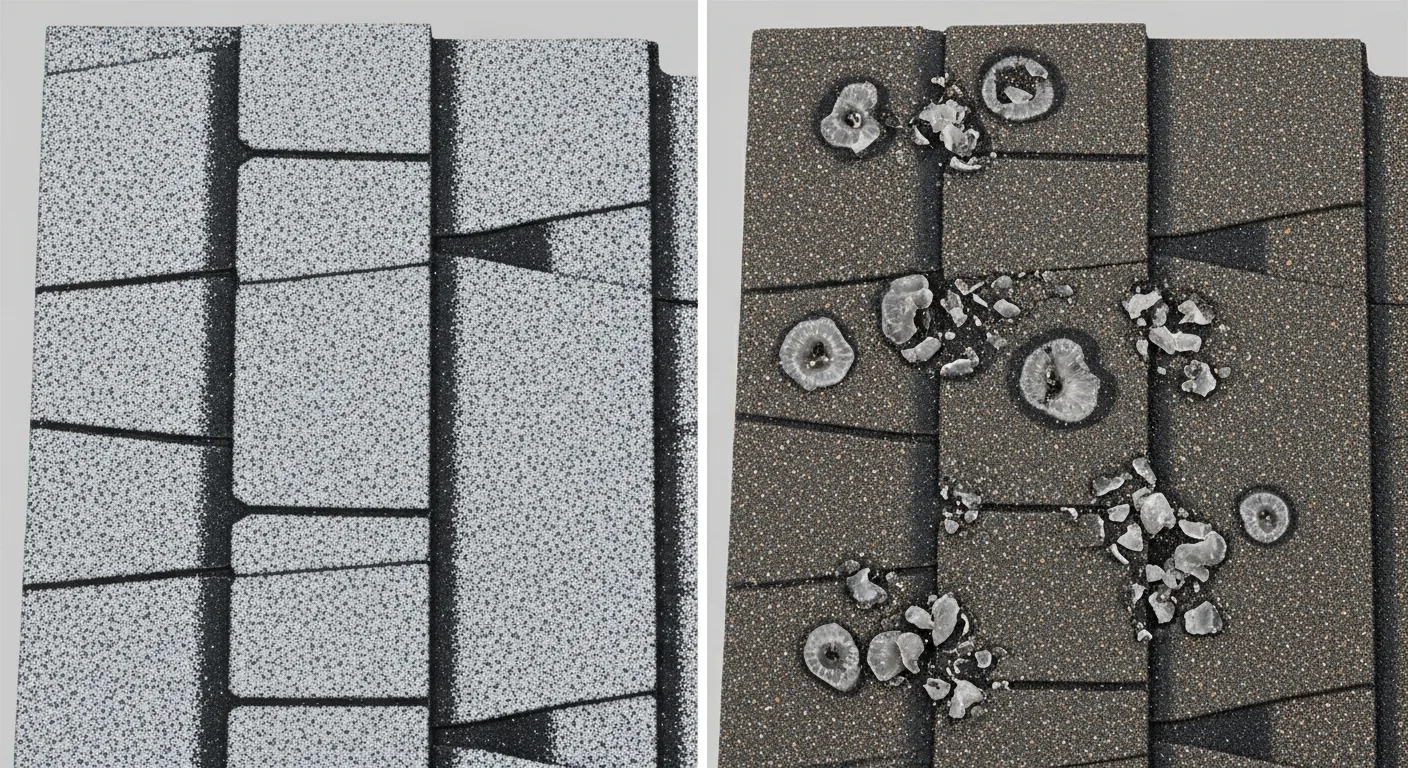
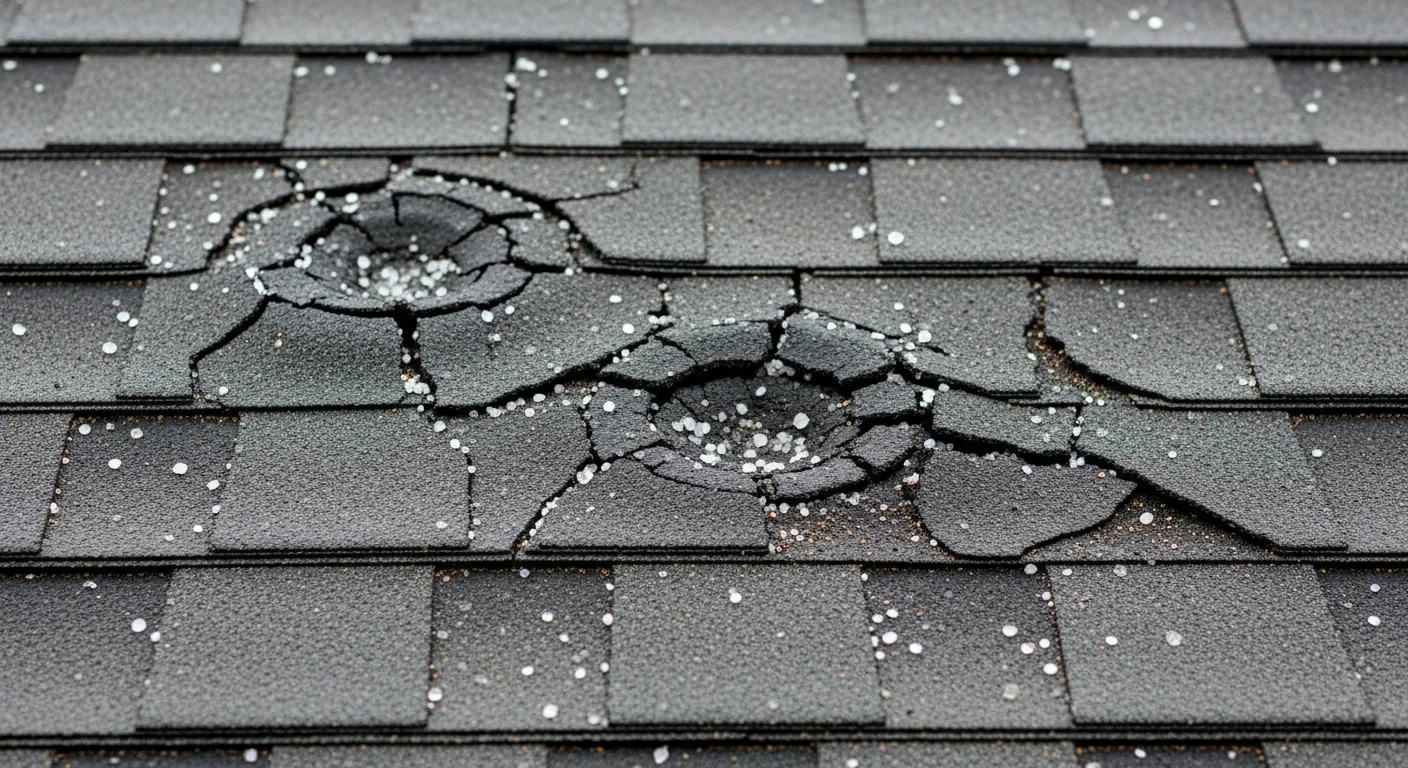
On asphalt shingles, hail impacts create bruising that exposes the underlying mat, accelerating UV degradation and moisture intrusion. These impacts appear as dark spots where protective granules have been knocked away, but they're virtually impossible to see from ground level. The National Roofing Contractors Association emphasizes that even quarter-sized hail can cause significant granule loss that shortens roof system lifespan by years.
Commercial membrane systems face different but equally serious challenges. TPO, EPDM, and PVC membranes can sustain punctures, splits, or surface degradation that appears minor from a distance but creates pathways for water infiltration. Metal roofing systems may show denting or coating damage that affects thermal reflectivity and corrosion resistance.
Key Factors That Make Hail Damage Hard to Detect
Several factors combine to make hail damage assessment from ground level unreliable and potentially dangerous for property owners who delay necessary repairs.
Distance and Perspective Limitations
Roof height creates significant visual obstacles. Even on single-story structures, the angle and distance make it impossible to assess granule loss, mat exposure, or subtle membrane damage. Color variations from granule displacement blend with natural weathering patterns, masking impact damage that trained inspectors easily identify up close.
Cumulative vs. Immediate Damage
Hail damage often manifests as accelerated aging rather than immediate failure. Impact-resistant shingles may maintain their structural integrity initially while sustaining granule loss that reduces their wind uplift resistance and thermal protection. This cumulative damage progresses invisibly until moisture intrusion or secondary storm damage creates obvious problems.
Varying Material Responses
Different roofing materials respond uniquely to hail impact. Architectural shingles may lose granules without obvious visual changes, while three-tab shingles might crack or split. Commercial membranes can develop micro-tears or surface abrasions that compromise their waterproofing capabilities without creating immediately visible damage.
The Insurance Institute for Business & Home Safety research demonstrates that hail as small as one inch can cause significant damage to standard asphalt shingles, with impact patterns varying based on shingle age, installation quality, and storm characteristics.
Professional Inspection Methods and Technologies
Professional roofing contractors employ systematic inspection protocols that reveal damage invisible from ground level. These comprehensive evaluations examine multiple building envelope components beyond just the primary roofing material.
Close-Range Visual Assessment
Trained inspectors examine shingles for granule loss patterns, exposed mat areas, and hairline cracks that indicate impact damage. They assess the consistency of granule coverage, looking for the telltale dark spots that signal compromised shingle integrity. On commercial systems, inspectors check for punctures, splits, membrane separation, and coating damage that affects long-term performance.
Comprehensive System Evaluation
Professional inspections extend beyond the roof surface to evaluate gutters, downspouts, flashing systems, and penetration seals. Hail damage to these components often indicates roof surface damage occurred as well. Inspectors also assess ventilation systems, HVAC equipment, and other roof-mounted components that may have sustained impact damage.
Documentation and Measurement
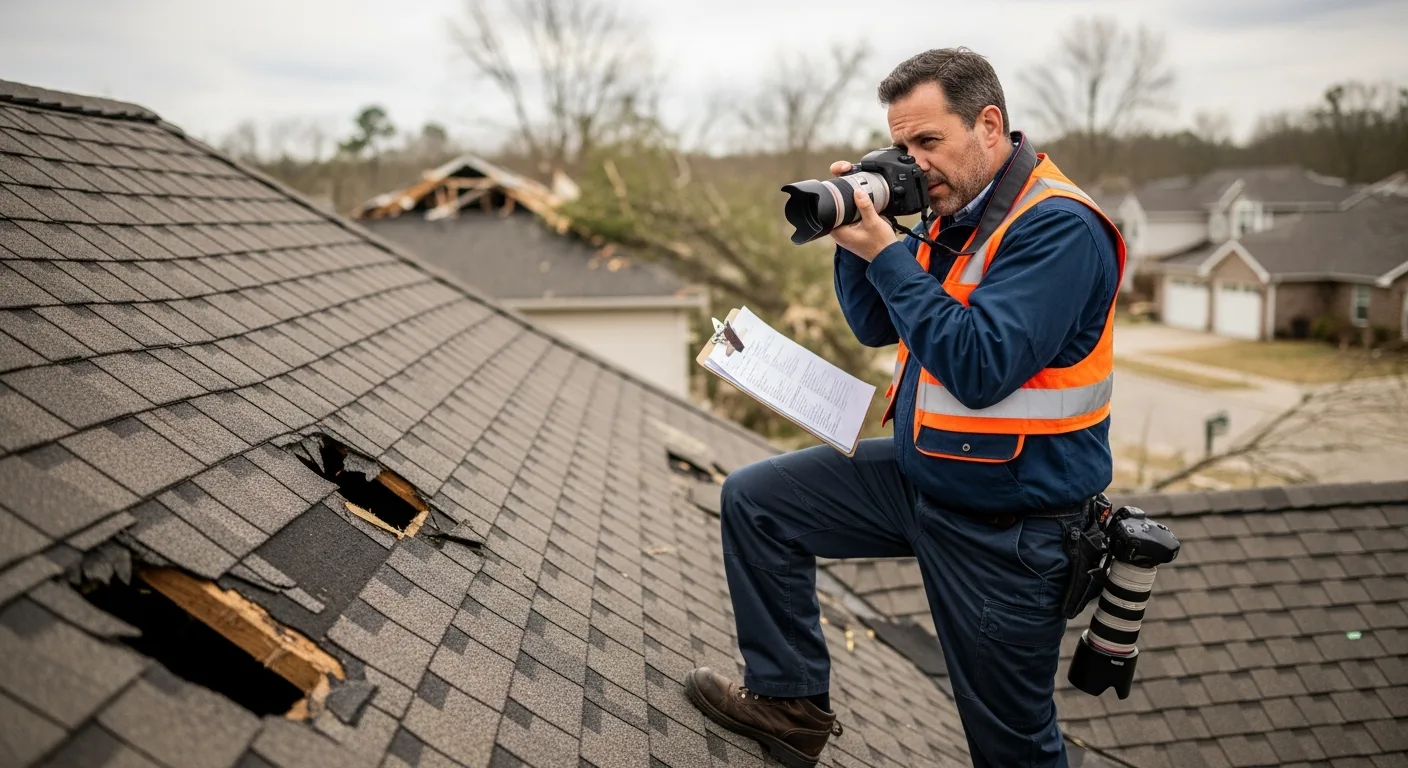
Professional inspectors document damage patterns, measure impact sizes, and photograph evidence using standardized protocols. This documentation proves essential for insurance claims and warranty considerations, providing the detailed evidence ground-level observations cannot supply.
Storm Damage Patterns in High-Wind, Hail-Prone Areas
The Texas Panhandle's severe weather patterns create unique challenges for roof system durability. High winds often accompany hailstorms, creating compound damage that may not manifest immediately but significantly reduces roof system lifespan.
Wind uplift forces can loosen hail-damaged shingles, while extreme temperature fluctuations cause damaged materials to expand and contract differently than undamaged sections. UV exposure in our region accelerates the degradation of granule-depleted shingles, turning minor hail damage into major system compromise within months.
Ponding water issues become more severe when drainage systems sustain hail damage, creating additional stress on commercial membrane systems already weakened by impact damage. These cascading effects emphasize why early detection through professional inspection prevents minor damage from becoming major building envelope failures.
When to Call a Professional Roofer
Schedule professional roof inspection immediately following any hailstorm, regardless of apparent damage from ground level. The Federal Emergency Management Agency recommends professional assessment after any severe weather event, noting that delayed identification often leads to more extensive and expensive repairs.
Professional inspection becomes critical when:
- Hail of any size impacts your property
- Neighbors report roof damage from the same storm
- Your roof is approaching its expected lifespan
- Previous hail damage has occurred in your area
- Insurance adjusters schedule property assessments
Additionally, schedule annual inspections in hail-prone regions to establish baseline roof conditions and document any progressive damage that affects warranty coverage or insurance claims.
The investment in professional inspection pays dividends through early damage detection, proper insurance claim documentation, and prevention of minor issues becoming major building envelope failures. For comprehensive hail damage assessment and repair solutions, explore our hail and wind damage repair page to understand how professional evaluation protects your property investment and ensures continued roof system performance in challenging Texas Panhandle weather conditions.
The Texas Panhandle's unique climate compounds the challenge of hail damage detection. With NOAA data showing the region experiencing some of the nation's most frequent severe hailstorms, combined with extreme temperature fluctuations that can exceed 100°F in summer and drop below freezing in winter, even minor hail impacts create accelerated deterioration cycles that remain hidden until catastrophic failure occurs.
Modern impact-resistant shingles, such as TAMKO's Heritage and Titan series designed specifically for hail-prone regions, feature enhanced mat construction and specialized granule adhesion systems. However, even these Class 4 impact-rated materials can sustain damage that compromises their performance without showing obvious visual cues from ground level. The subtle fracturing of the asphalt matrix and displacement of protective granules creates vulnerability points where UV radiation and moisture can penetrate, initiating a degradation process that may not become apparent for months or even years.
Professional inspection protocols, as outlined by NRCA standards for post-storm damage assessment, require close examination of impact points, granule loss patterns, and exposed mat areas that can only be properly evaluated from roof level. These inspections also assess critical components often overlooked during ground-level evaluations, including gutters, downspouts, vents, and flashing systems that may show impact damage indicating the severity of hail affecting the roof surface.
The Insurance Institute for Business & Home Safety research demonstrates that undetected hail damage can reduce shingle life expectancy by 30-50%, while simultaneously voiding manufacturer warranties that specifically require timely damage reporting. In the Texas Panhandle's harsh climate, where thermal cycling and UV exposure are particularly intense, this accelerated aging process can transform what should be a 20-30 year roof system into one requiring replacement within a decade.
Wind-driven hail, common in Panhandle supercell thunderstorms, creates impact patterns that differ significantly from straight-down hail damage. National Severe Storms Laboratory research indicates that wind-driven hailstones can impact roofing materials at angles exceeding 45 degrees, creating damage patterns on vertical surfaces and underlap areas of shingles that are completely invisible from ground observation. These angled impacts can compromise the waterproofing integrity of the roof system without creating the obvious surface damage that property owners typically associate with hail impact.
Documentation standards for insurance claims processing require specific photographic evidence and damage quantification that can only be obtained through professional roof-level inspection. Ground-level photography, regardless of camera quality or zoom capabilities, cannot capture the subtle granule loss patterns, mat exposure, and impact bruising that insurance adjusters and manufacturers require for valid claims and warranty coverage.