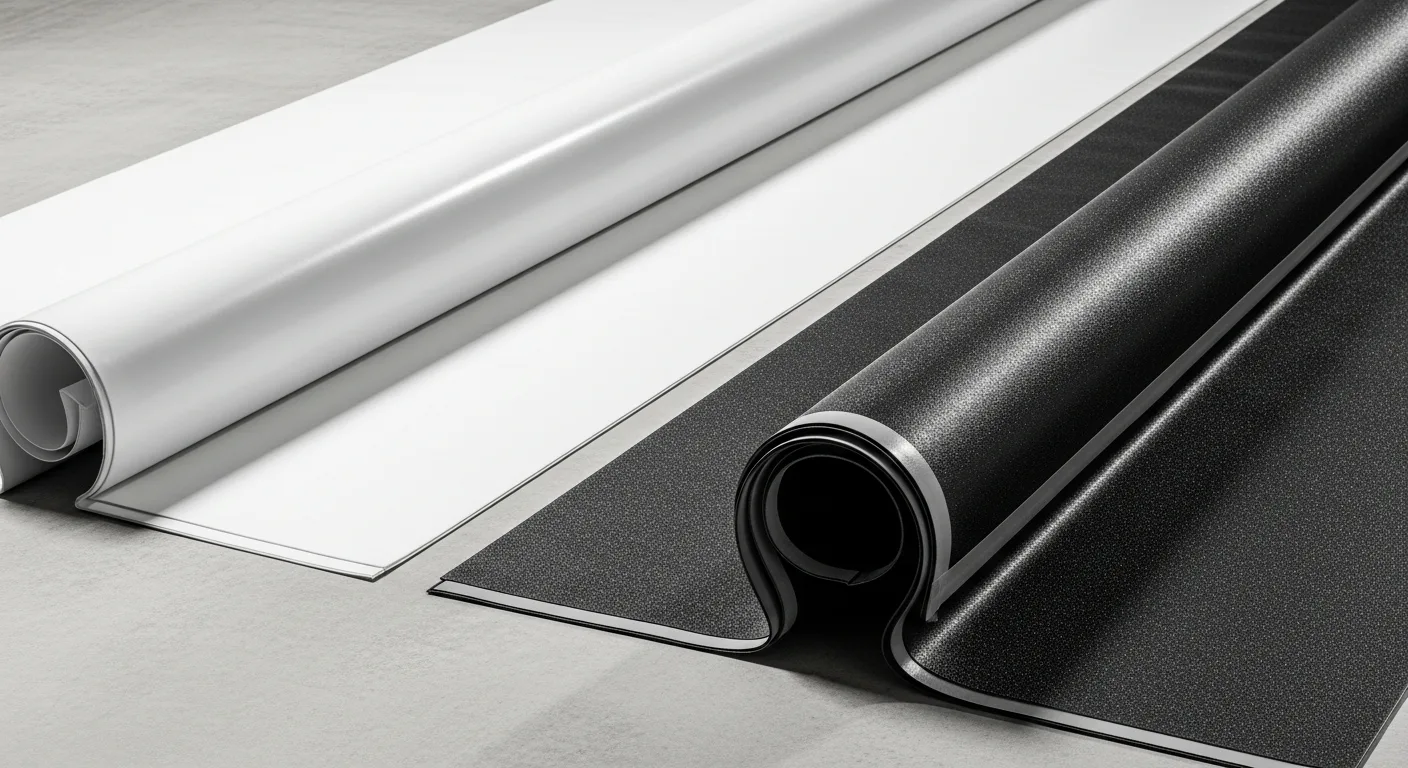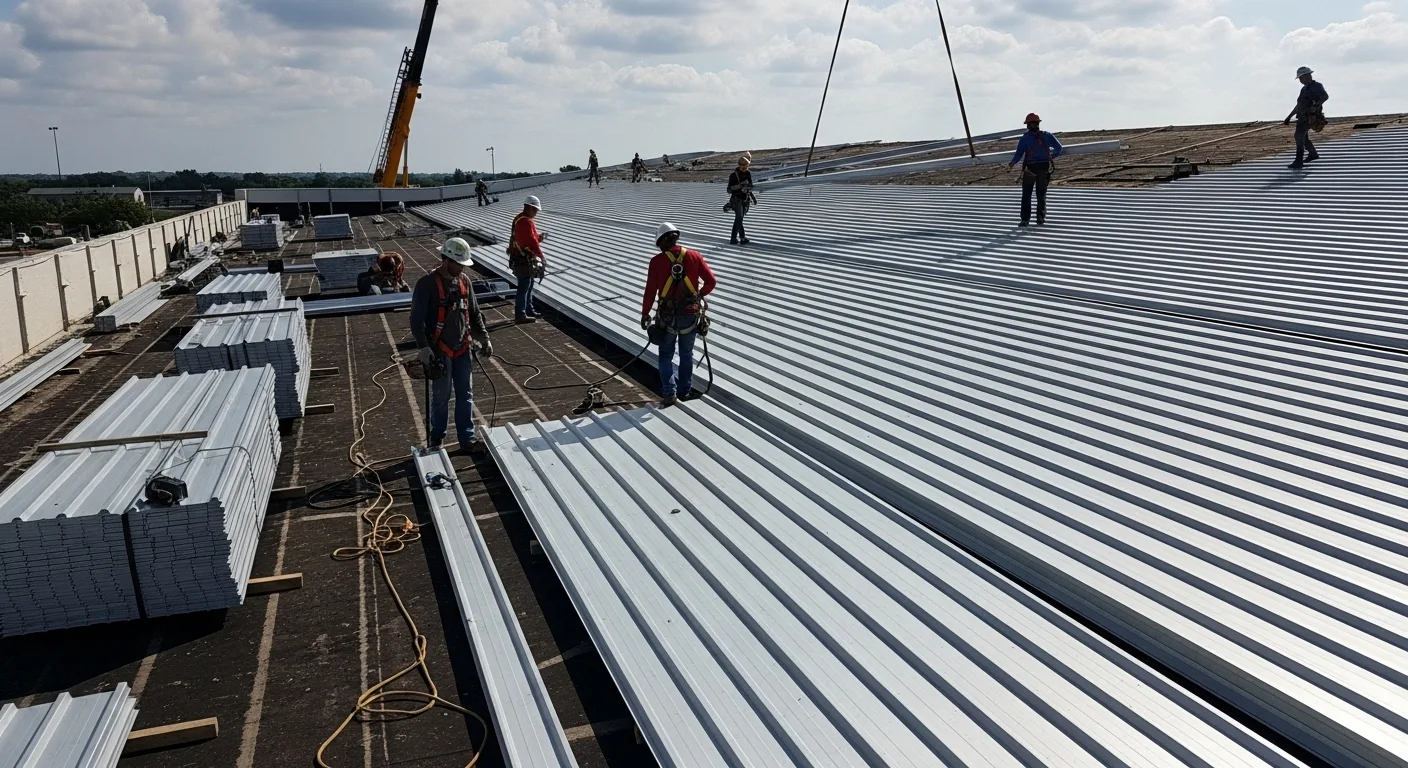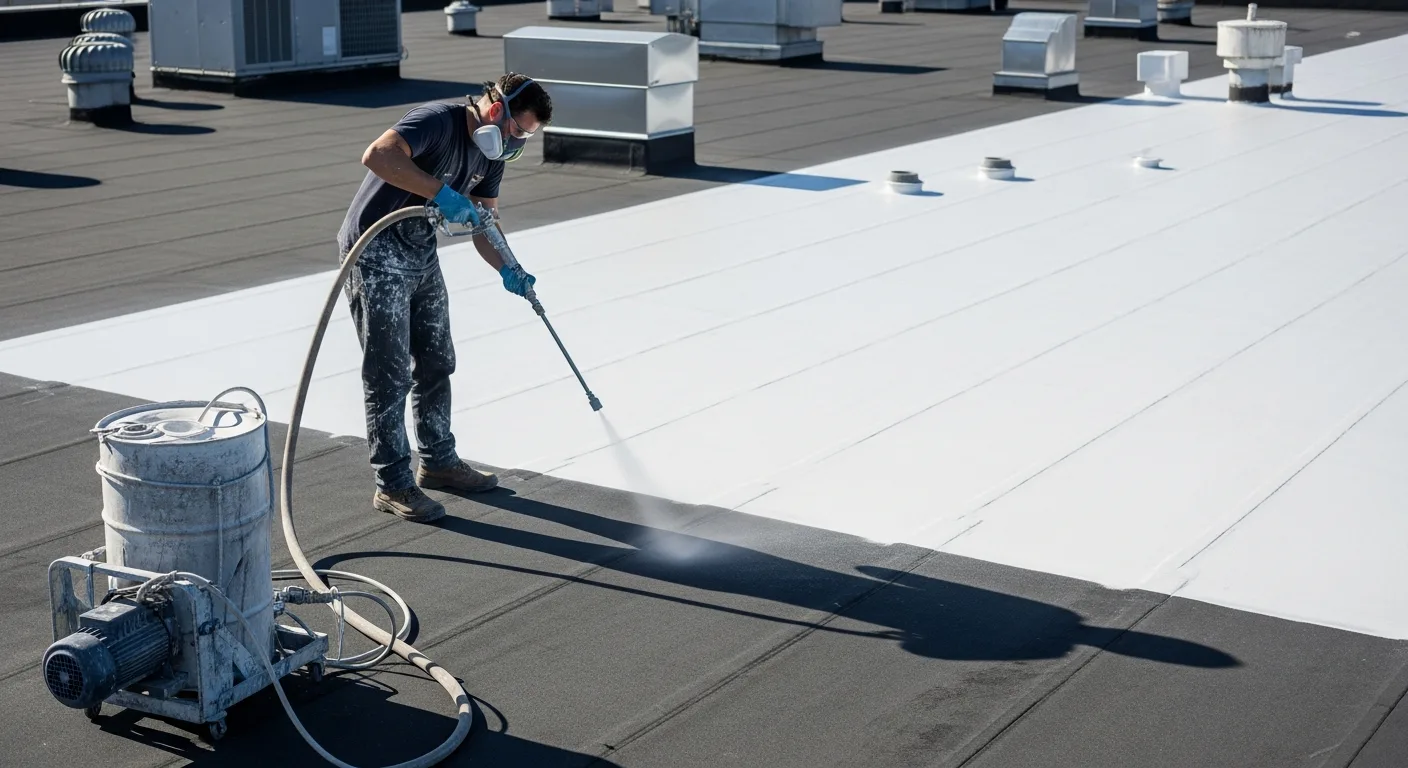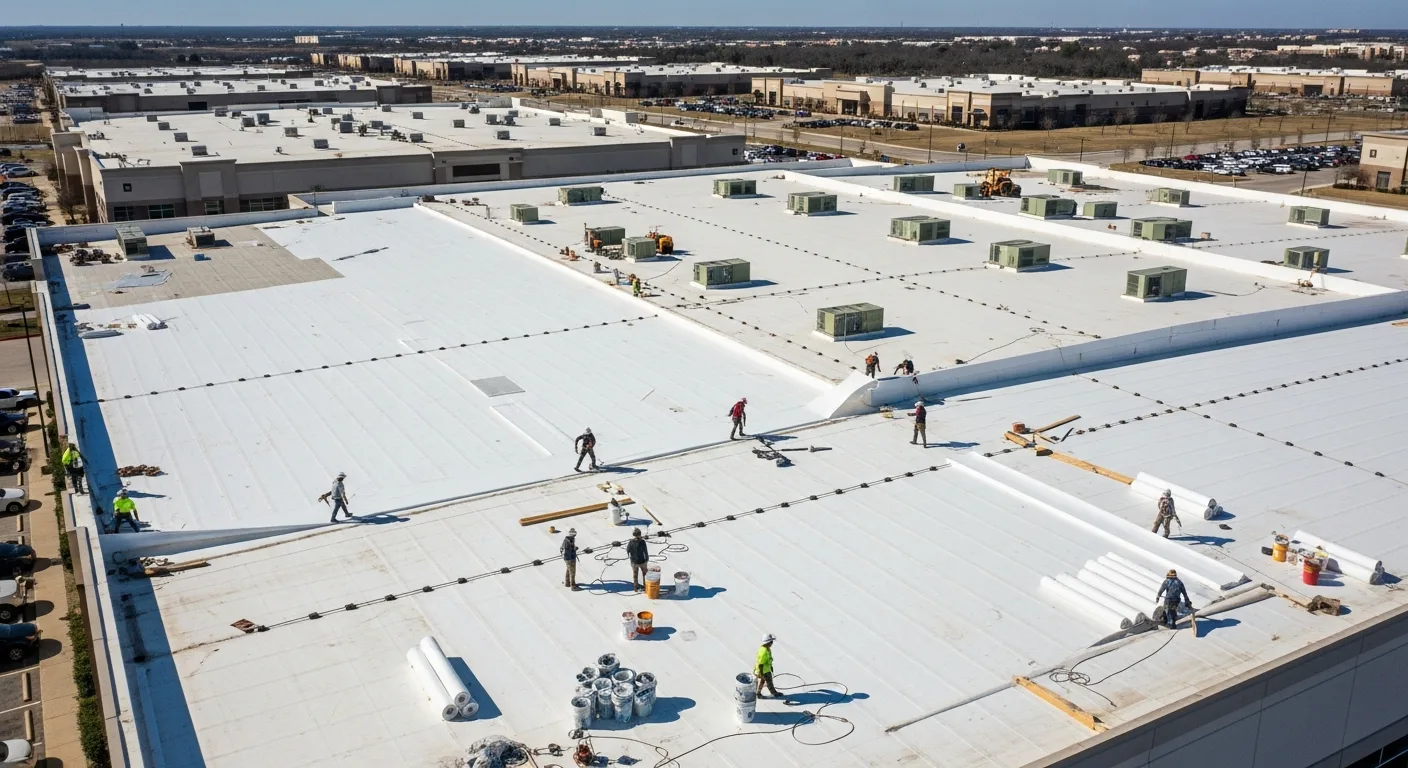
When evaluating commercial membrane systems for flat or low-slope roofs, building owners consistently face the decision between three primary single-ply options: TPO (Thermoplastic Polyolefin), EPDM (Ethylene Propylene Diene Monomer), and PVC (Polyvinyl Chloride). Each membrane offers distinct advantages in terms of performance characteristics, installation methods, and long-term value, making the selection process critical for protecting your commercial investment and ensuring optimal roof system lifespan.
What These Membrane Systems Are and Why They Matter
Single-ply commercial membrane systems represent the modern standard for protecting flat and low-slope commercial buildings. Unlike traditional built-up roofing systems with multiple layers, these membranes provide waterproofing through a single, continuous sheet that forms the primary barrier against moisture intrusion. The choice between TPO, EPDM, and PVC significantly impacts your building's energy efficiency, maintenance requirements, and resistance to environmental factors common in the Texas Panhandle, including severe weather, UV exposure, and extreme temperature fluctuations.
Understanding the fundamental differences between these three membrane types helps building owners align their roofing investment with specific performance requirements, budget constraints, and long-term facility goals. Each system offers unique benefits in terms of thermal reflectivity, chemical resistance, and installation flexibility that directly influence operational costs and building envelope performance.
TPO Membrane Characteristics and Performance
TPO membranes have gained significant market share due to their balance of performance and cost-effectiveness. These thermoplastic membranes typically feature white or light-colored surfaces that provide excellent thermal reflectivity, contributing to "cool roof" performance and reduced cooling costs. TPO systems demonstrate strong wind uplift resistance and puncture resistance, making them suitable for high-wind areas like the Texas Panhandle.
The heat-weldable nature of TPO allows for strong, permanent seams that resist moisture penetration and thermal movement. However, TPO formulations have evolved over the years, with some early products experiencing premature aging. Modern TPO membranes from established manufacturers like GAF and Carlisle offer improved longevity and consistency.
Installation versatility represents another TPO advantage, as these membranes can be mechanically attached, fully adhered, or ballasted depending on building requirements and local wind conditions. The relatively lightweight nature of TPO systems reduces structural loading while maintaining durability against common rooftop hazards.
TPO Advantages:
- Cost-effective initial installation
- Excellent thermal reflectivity and energy efficiency
- Strong heat-welded seams
- Good puncture and tear resistance
- Flexible installation methods
EPDM Membrane Benefits and Applications
EPDM rubber membranes represent the longest-established single-ply technology, with a proven track record spanning over four decades. These synthetic rubber membranes excel in extreme temperature environments, maintaining flexibility in cold conditions and stability under intense heat and UV exposure. The black surface of traditional EPDM absorbs heat, which can increase cooling costs but may provide benefits in heating-dominated climates.
The primary strength of EPDM lies in its exceptional durability and resistance to ozone, weathering, and thermal cycling. Unlike thermoplastic membranes, EPDM uses adhesive-bonded seams rather than heat welding, requiring careful installation techniques to ensure long-term watertightness. However, when properly installed by experienced contractors, EPDM systems regularly achieve 20-30 year service lives with minimal maintenance.
EPDM membranes offer excellent resistance to ponding water, a common concern on flat commercial roofs with inadequate drainage dynamics. The rubber composition maintains its integrity even under prolonged water exposure, making it suitable for buildings where perfect drainage cannot be guaranteed.
EPDM Advantages:
- Proven long-term durability
- Excellent weather and UV resistance
- Superior low-temperature flexibility
- Resistance to ponding water
- Lower lifecycle costs despite higher initial investment
PVC Membrane Performance and Specialty Applications
PVC membranes offer the highest level of chemical resistance among single-ply systems, making them ideal for buildings exposed to grease, oils, or other potentially damaging substances. Restaurants, manufacturing facilities, and buildings with rooftop equipment that may leak fluids benefit significantly from PVC's superior chemical resistance properties.
Like TPO, PVC membranes use heat welding for seam formation, creating strong, permanent bonds that resist separation under thermal stress and wind uplift forces. PVC systems typically feature white or light-colored surfaces that provide excellent thermal reflectivity, contributing to reduced cooling costs and meeting cool roof requirements.
The fire resistance properties of PVC membranes exceed those of TPO and EPDM systems, making them suitable for buildings with specific fire safety requirements. Additionally, PVC maintains better flexibility at low temperatures compared to TPO, though not matching EPDM's cold-weather performance.
PVC Advantages:
- Superior chemical and grease resistance
- Excellent fire resistance properties
- Strong heat-welded seams
- Good thermal reflectivity
- Resistance to bacterial growth
Performance in High-Wind and Severe Weather Conditions
In storm-prone regions like the Texas Panhandle, membrane selection must account for severe weather resistance and wind uplift performance. All three membrane types can meet high wind uplift requirements when properly installed with appropriate attachment methods, but their responses to hailstorms and severe weather events differ significantly.
TPO and PVC membranes generally offer better impact resistance against hail damage compared to EPDM, though all three systems benefit from impact-resistant cover board installation in high-risk areas. The heat-welded seams of TPO and PVC provide additional security against wind-driven rain infiltration during severe storms.
EPDM's superior flexibility helps it resist stress cracking from thermal cycling and building movement during temperature extremes, while TPO and PVC may experience more stress at penetrations and transitions. However, modern formulations of all three membrane types demonstrate improved resistance to environmental stressors when installed according to manufacturer specifications and National Roofing Contractors Association guidelines.
Proper installation becomes critical in high-wind areas, where membrane attachment methods must meet or exceed local wind load requirements. Building owners should ensure their roofing contractor has experience with the specific membrane type and understands local weather challenges that affect long-term performance.
Cost Considerations and Long-Term Value
Initial installation costs typically favor TPO as the most economical option, followed by EPDM and PVC as premium choices. However, long-term value calculations must consider energy savings, maintenance requirements, and expected service life. White TPO and PVC membranes provide cooling cost savings in hot climates, while EPDM's proven durability may offer better long-term value despite higher initial costs.
Warranty requirements and manufacturer support vary between membrane types and manufacturers. Building owners should evaluate not only the membrane warranty length but also the reputation and stability of the manufacturer, as warranty claims depend on the company's long-term viability. Established manufacturers typically offer comprehensive warranties that cover both materials and installation when work is performed by certified contractors.
Energy efficiency incentives and cool roof rebates may influence the total cost equation, particularly for reflective TPO and PVC systems that meet Department of Energy cool roof standards. These incentives can offset higher material costs while providing ongoing operational savings through reduced cooling expenses.
When to Call a Professional Commercial Roofing Contractor
Selecting the optimal membrane system requires professional evaluation of your specific building conditions, local climate factors, and operational requirements. Experienced commercial roofing contractors can assess structural loading, drainage adequacy, and existing roof conditions to recommend the most suitable membrane type and installation method.
Professional installation becomes particularly critical for membrane systems, as improper seaming, inadequate attachment, or poor detail work can compromise system performance regardless of membrane quality. Certified contractors have access to specialized equipment for heat welding and proper training in manufacturer installation requirements that directly impact warranty coverage.
Consider consulting with a professional roofer when evaluating membrane options, as they can provide detailed cost comparisons, energy efficiency calculations, and maintenance projections specific to your building and local conditions. Visit our commercial roofing services section to learn more about professional membrane system evaluation and installation services that protect your commercial investment for decades to come.
The Texas Panhandle's unique climate demands careful consideration of membrane performance under extreme conditions. With summer temperatures regularly exceeding 100°F and severe hail events documented by the National Severe Storms Laboratory, commercial membrane selection must prioritize thermal stability and impact resistance. TPO membranes typically offer superior reflectivity ratings of 0.78 or higher, making them particularly effective for reducing cooling loads in Amarillo's intense summer heat.
Industry standards play a crucial role in membrane selection and installation. The Single Ply Roofing Industry (SPRI) establishes critical testing protocols for wind uplift resistance, puncture strength, and seam integrity that directly impact membrane performance in high-wind environments common to the Texas Panhandle. EPDM systems must meet ASTM D4637 specifications, while PVC membranes are tested under ASTM D4434 standards for dimensional stability and low-temperature flexibility.
Installation methodology varies significantly between membrane types, affecting both initial cost and long-term performance. Carlisle SynTec's Sure-Weld TPO systems utilize heat-welded seams that create homogeneous bonds stronger than the membrane itself, crucial for withstanding the thermal cycling experienced in Texas climates. EPDM installations rely on adhesive or mechanical attachment, while PVC systems offer both heat-welded and solvent-welded seaming options.
Energy efficiency considerations extend beyond reflectivity to include emissivity ratings and thermal bridging reduction. Energy Star qualified roof products must meet specific initial solar reflectance values: 0.65 for low-slope membranes, with aged reflectance maintaining 0.50 or higher. This performance directly translates to reduced HVAC loads and improved building energy ratings under programs like LEED certification from the U.S. Green Building Council.
Safety considerations during installation and maintenance require adherence to OSHA fall protection standards, particularly relevant given the flat roof profiles common in commercial membrane applications. Proper installation techniques must also account for thermal movement, with PVC systems requiring specific expansion joint details and TPO installations needing adequate securement to resist wind uplift forces that can exceed 90 mph during Texas Panhandle storms.