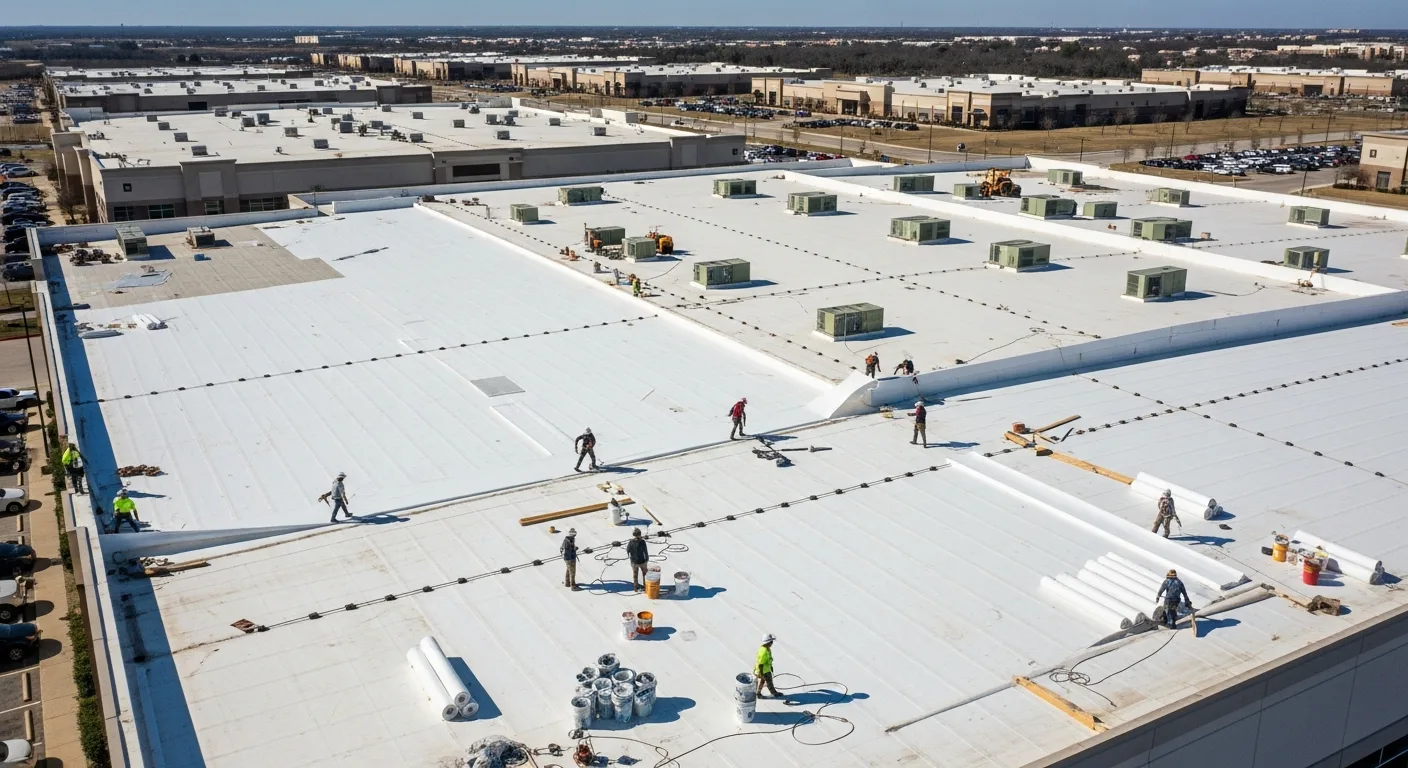
Commercial buildings with substantial HVAC equipment, cooling towers, exhaust fans, and multiple rooftop penetrations face unique roofing challenges that standard residential systems simply cannot handle. The combination of concentrated loads, vibration stress, and numerous waterproofing breach points requires specialized roofing systems engineered for both structural integrity and long-term weatherproofing performance.
Why Heavy Equipment Changes Everything for Commercial Roofing
When commercial buildings support significant rooftop equipment loads, the roof system transforms from a simple weather barrier into a critical structural platform. Heavy HVAC units, generators, and industrial equipment create concentrated point loads that can exceed 100 pounds per square foot in some areas, far beyond what typical commercial membrane systems are designed to handle without proper reinforcement.
The building envelope must also accommodate thermal expansion and contraction cycles, equipment vibration, and the complex waterproofing requirements around multiple penetrations. Each pipe, conduit, or equipment support creates a potential failure point where moisture intrusion can compromise the entire roof system. The National Roofing Contractors Association emphasizes that proper system selection becomes critical when dealing with these complex loading and penetration scenarios.
Impact on Roof System Lifespan
Standard commercial roofing systems typically achieve 15-25 year lifespans under normal conditions. However, improper system selection for heavy equipment applications can reduce this to 8-12 years due to premature membrane failure, fastener pullout, or structural deck deflection. The key lies in matching the roof system's structural capabilities with the actual loading requirements while maintaining waterproofing integrity around penetrations.
Optimal Roofing Systems for Heavy Equipment Applications
Structural Concrete Decks with Modified Bitumen
For buildings supporting extremely heavy equipment, structural concrete decks provide the most robust foundation. When combined with multi-ply modified bitumen membrane systems, this approach offers excellent puncture resistance and can accommodate significant point loads. The modified bitumen's self-healing properties around fasteners and penetrations make it particularly suitable for equipment-heavy environments.
This system excels in wind uplift resistance, typically achieving ratings exceeding 90 pounds per square foot, crucial in the Texas Panhandle's severe weather environment. The membrane's flexibility also accommodates thermal movement without cracking around equipment supports.
TPO and PVC Single-Ply Systems with Enhanced Insulation
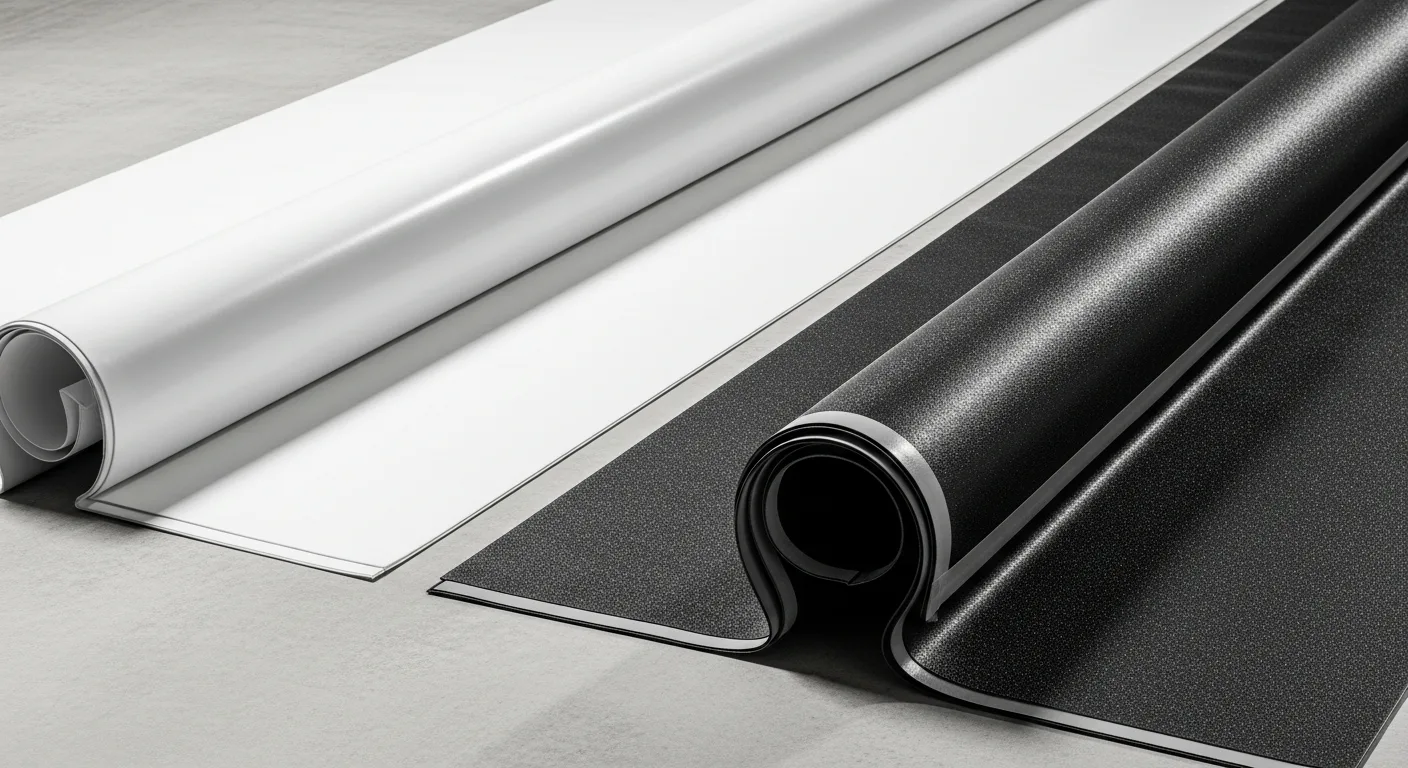
Thermoplastic polyolefin (TPO) and polyvinyl chloride (PVC) membrane systems offer excellent chemical resistance and heat-welded seam strength, making them ideal for buildings with multiple rooftop penetrations. These single-ply systems can be mechanically fastened or fully adhered over high-density insulation that helps distribute equipment loads across the structural deck.
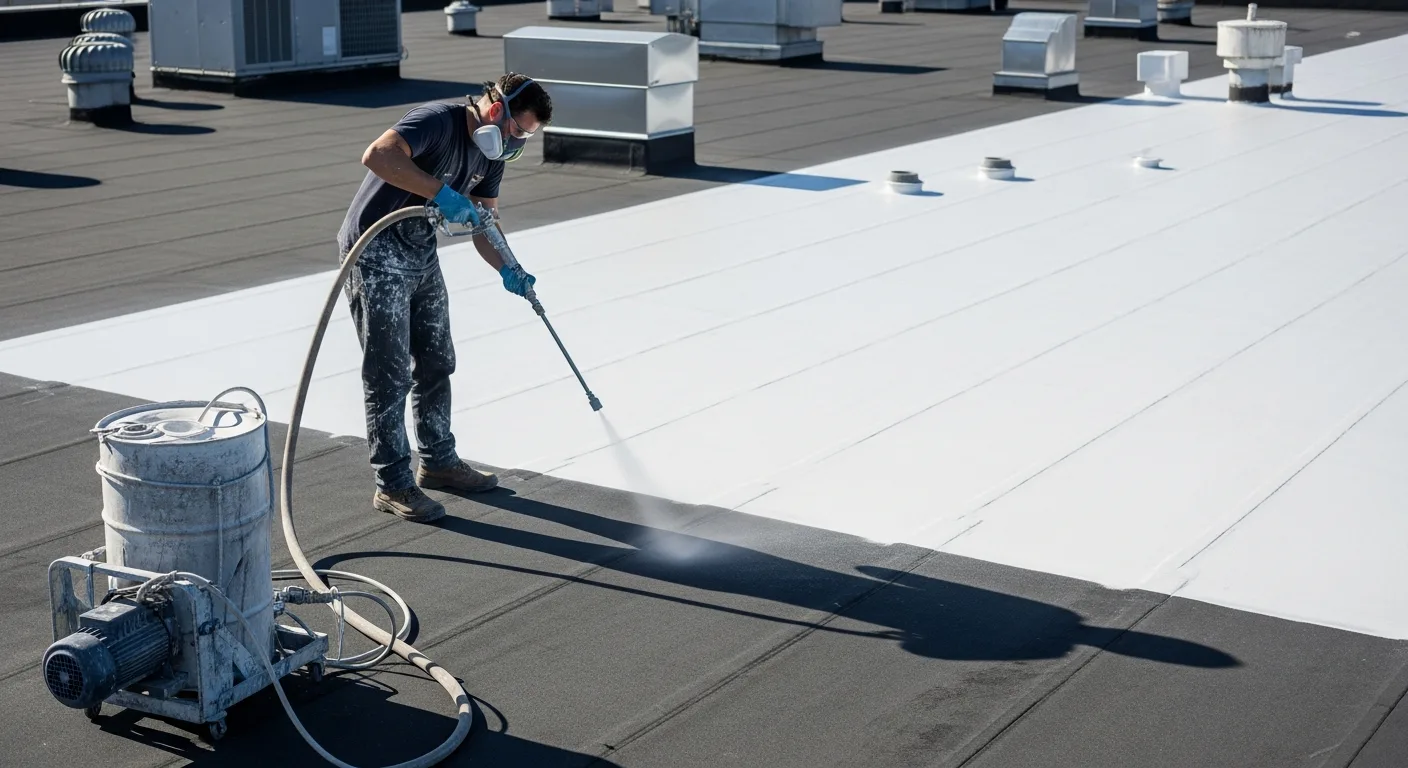
The key advantage lies in these systems' superior thermal reflectivity, often achieving cool roof standards that can reduce HVAC equipment operating loads by 10-15%. For buildings already supporting heavy cooling equipment, this energy efficiency can provide substantial operational savings while extending equipment life.
Built-Up Roofing (BUR) for Maximum Durability
Traditional built-up roofing systems, consisting of multiple plies of reinforcing fabric embedded in hot asphalt, provide exceptional durability for heavy equipment applications. The multi-layer construction creates a monolithic membrane that can withstand significant foot traffic and maintenance activity around equipment.
BUR systems excel in puncture resistance and can be designed with specific reinforcement layers around equipment supports. The aggregate surfacing also provides excellent protection against UV exposure and impact damage from maintenance activities.
Critical Design Considerations for Equipment-Loaded Roofs
Structural Load Distribution
Proper load distribution requires coordination between structural engineering and roofing system design. Equipment pads, structural supports, and membrane reinforcement must work together to transfer loads safely to the building structure. This typically involves:
- Engineered equipment pads that distribute point loads over larger deck areas
- Reinforced membrane systems around support points
- Proper flashing and penetration sealing systems
- Consideration for thermal movement and vibration isolation
Drainage Dynamics Around Equipment
Heavy rooftop equipment can significantly impact roof drainage patterns. Proper system design must prevent ponding water around equipment bases while maintaining positive drainage to roof drains. This often requires:
- Tapered insulation systems that direct water away from equipment
- Internal roof drain systems sized for actual drainage areas
- Overflow drain placement that accounts for equipment obstructions
- Membrane systems that maintain waterproofing integrity under equipment loads
Penetration Management Systems
Buildings with numerous rooftop penetrations require specialized flashing and sealing approaches. The FEMA Design Guide recommends redundant waterproofing systems around critical penetrations, including base flashing, counter-flashing, and sealant systems that can accommodate building movement.
Performance in High-Wind and Severe Weather Environments
The Texas Panhandle's extreme weather conditions add another layer of complexity to equipment-loaded roof design. High winds create uplift forces that can exceed 150 pounds per square foot, while hailstorms pose impact risks to both membrane systems and equipment.
Wind uplift resistance becomes critical around equipment supports, where concentrated attachment points can create stress concentration in membrane systems. Proper system design must account for both positive and negative wind pressures while maintaining waterproofing integrity around all penetrations.
Impact-Resistant Considerations
Hail impact protection requires careful material selection and system design. Equipment screens, protective walkways, and impact-resistant membrane systems help protect both the roof and critical building systems. The Insurance Institute for Business & Home Safety provides guidance on designing commercial roof systems for severe weather resistance.
Maintenance Access and Serviceability
Commercial roofs supporting heavy equipment require regular maintenance access without compromising membrane integrity. This necessitates:
- Protected walkway systems that distribute foot traffic loads
- Equipment platforms that allow service access without roof contact
- Membrane systems that can withstand maintenance activity
- Clear access routes that don't compromise drainage patterns
The roof system must also accommodate equipment replacement and upgrading over the building's lifespan. Removable insulation sections, reinforced membrane areas, and accessible penetration systems allow for equipment modifications without complete roof replacement.
When to Consult Professional Commercial Roofing Contractors
Buildings with heavy HVAC equipment or numerous rooftop penetrations require professional engineering evaluation and specialized roofing expertise. The interaction between structural loading, weatherproofing requirements, and building code compliance creates complexity that demands professional assessment.
Professional evaluation becomes essential when considering equipment additions, roof replacement, or addressing performance issues. Structural load calculations, drainage analysis, and wind uplift assessments require coordination between roofing contractors, structural engineers, and mechanical contractors to ensure optimal system performance.
If your commercial building supports significant rooftop equipment or you're planning equipment installations, explore our commercial roofing services section to learn how proper system selection can protect your investment while ensuring reliable building performance for decades to come.
The Texas Panhandle's extreme climate conditions add another layer of complexity to commercial roofing systems supporting heavy equipment. With summer temperatures regularly exceeding 100°F and hail events documented by the National Severe Storms Laboratory that can produce softball-sized stones, roofing membranes must withstand both thermal cycling and severe impact loads while maintaining structural integrity under equipment weight.
For commercial buildings with substantial HVAC loads, membrane manufacturers like Carlisle SynTec recommend reinforced TPO systems with enhanced puncture resistance ratings of at least 350 lbf for equipment areas. These systems incorporate reinforced fabric backing and thicker membrane construction to handle the combination of point loads from equipment supports and potential impact damage from Texas hailstorms.
Wind uplift resistance becomes critical in the Texas Panhandle, where straight-line winds can exceed 80 mph during severe thunderstorms. SPRI standards require uplift ratings that account for both the base building wind loads and the additional aerodynamic effects created by rooftop equipment. Large HVAC units can create wind acceleration zones that increase uplift forces by 40-60% in adjacent membrane areas, requiring enhanced attachment methods and potentially thicker insulation boards for better fastener holding power.
Equipment vibration poses unique challenges that standard membrane systems weren't designed to handle. Continuous vibration from large commercial HVAC units can cause fastener loosening and membrane fatigue over time. Building envelope consultants from IIBEC recommend isolation systems that decouple equipment from the roof structure, reducing transmitted vibration while maintaining proper support. This approach extends membrane life and prevents premature failure around equipment areas.
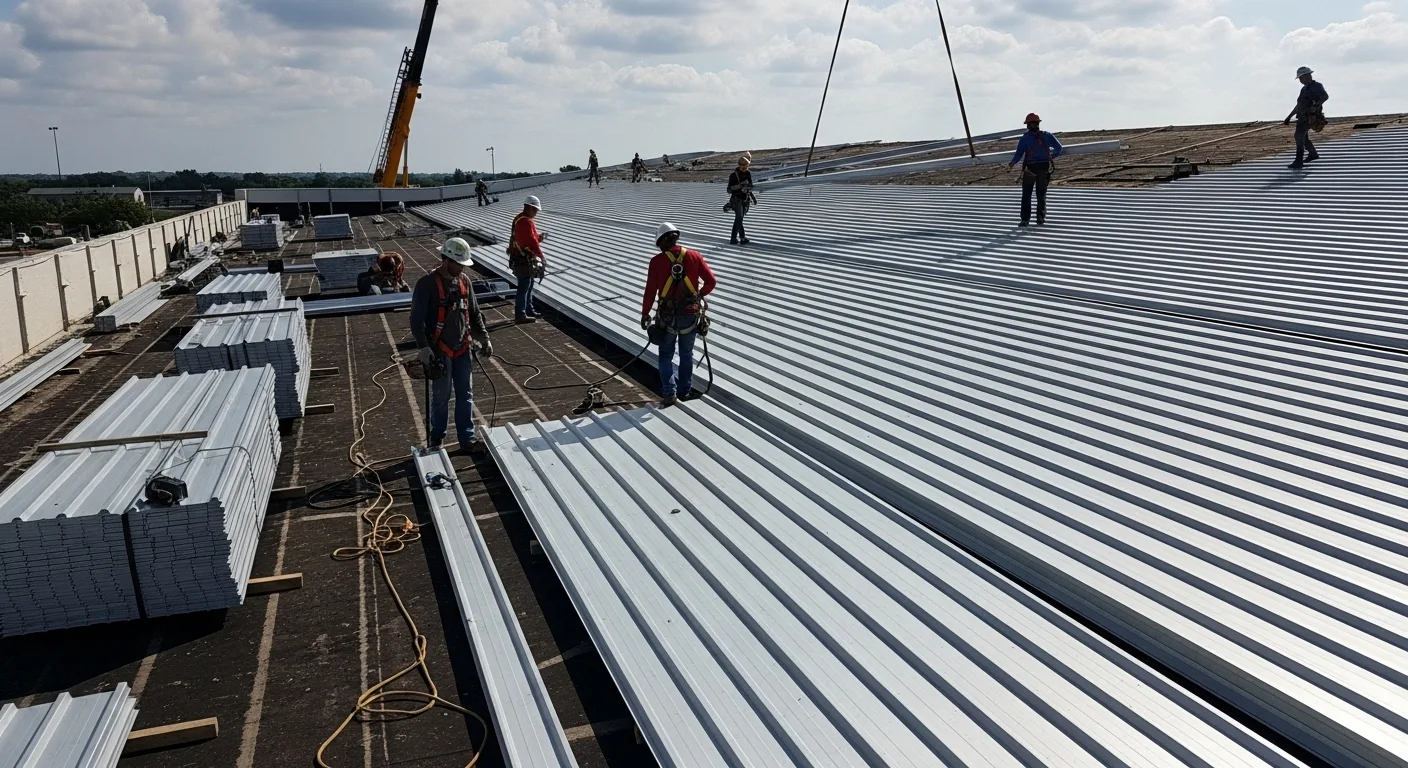
Safety considerations become paramount when working around heavy rooftop equipment. OSHA regulations require fall protection systems that don't interfere with equipment operation or maintenance access. Properly designed commercial roofing systems incorporate permanent anchor points and walkway systems that allow safe access to equipment while protecting the membrane from foot traffic damage.
Energy efficiency requirements under current building codes add another dimension to system selection. In Texas's hot climate, Cool Roof Rating Council certified membranes with high solar reflectance can significantly reduce cooling loads, which is especially beneficial for buildings with energy-intensive rooftop equipment. Light-colored TPO and PVC membranes can achieve initial reflectance values of 0.80 or higher, reducing roof surface temperatures by 50-60°F compared to traditional black membranes.