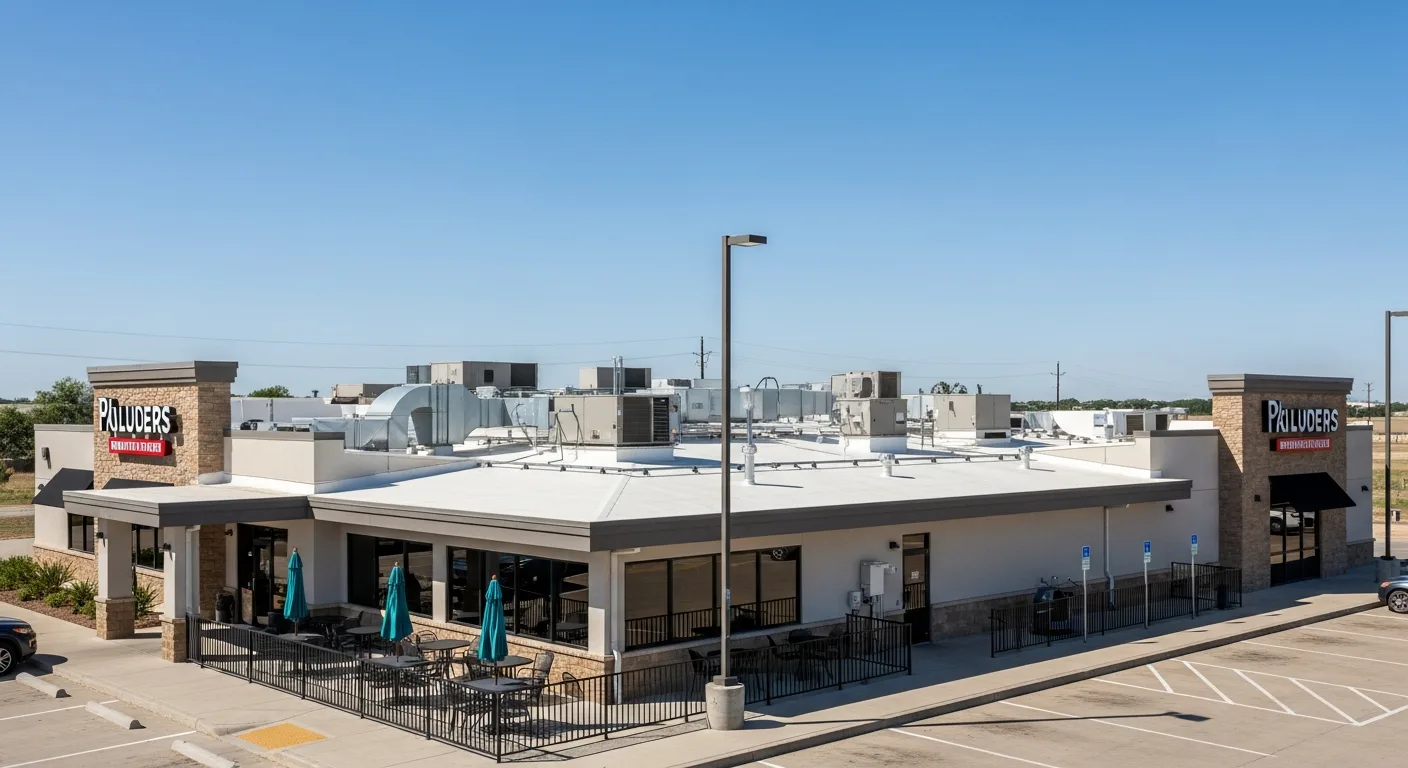
Restaurant roofing faces unique challenges that most commercial properties never encounter, with grease-laden exhaust creating one of the most destructive environments for roofing materials. The constant exposure to grease, heat, and chemical vapors from kitchen ventilation systems can accelerate roof degradation by years, turning what should be a 20-year roof into a maintenance nightmare requiring repairs every few years. Understanding how grease venting affects your restaurant's roof is crucial for making informed decisions about materials, maintenance, and long-term facility management.
The Hidden Destruction of Grease-Laden Exhaust
When restaurants operate their kitchens, exhaust fans pull grease particles, steam, and chemical vapors through ductwork and release them onto the roof surface. This seemingly harmless process creates a complex chemical attack on roofing materials that goes far beyond simple dirt accumulation. The grease doesn't just sit on the surface—it penetrates membrane materials, breaks down protective coatings, and creates conditions that accelerate normal weathering processes.
The National Roofing Contractors Association has documented how organic compounds in grease exhaust can chemically interact with roofing polymers, causing premature embrittlement and cracking. This chemical degradation happens gradually, often going unnoticed until significant damage has occurred. Restaurant owners frequently discover extensive roof damage during routine inspections, wondering how their relatively new roof could deteriorate so quickly.
Temperature Fluctuations and Thermal Shock
Restaurant exhaust systems don't just deposit grease—they also subject roof areas to extreme temperature variations throughout each day. Kitchen exhaust can reach temperatures exceeding 140°F, while the surrounding roof surface remains at ambient temperature. This creates thermal shock conditions that cause roofing materials to expand and contract repeatedly, leading to membrane splitting, fastener loosening, and accelerated aging of all roof components.
The constant cycling between hot exhaust temperatures and cooler ambient conditions creates stress points around exhaust penetrations. These areas become the weakest links in the roofing system, often developing leaks years before other roof sections show signs of wear. Understanding these thermal dynamics is essential for implementing proper maintenance programs that address the unique stresses of restaurant environments.
Chemical Breakdown of Common Roofing Materials
Different roofing materials respond differently to grease exposure, but none remain completely unaffected. EPDM rubber membranes, while generally chemical-resistant, can experience plasticizer migration when exposed to certain cooking oils, leading to hardening and cracking over time. TPO and PVC membranes may show better initial resistance, but prolonged exposure to grease and cleaning chemicals can compromise their protective surface layers.
Built-up roofing systems face particular challenges from grease accumulation. The organic compounds in cooking exhaust can interact with asphalt-based materials, causing softening in hot weather and brittleness in cold conditions. Modified bitumen systems, while more resilient than traditional built-up roofs, still experience accelerated granule loss and membrane deterioration in high-grease environments.
The Penetration Problem
Grease doesn't remain on the surface where it can be easily cleaned. Instead, it gradually penetrates through membrane materials, especially in areas where the protective coating has been compromised by foot traffic or weather exposure. Once grease penetrates the membrane, it creates ongoing chemical reactions that continue the degradation process from within the roofing system.
This internal contamination is particularly problematic because it's invisible until serious damage occurs. The Department of Energy has studied how oil-based contaminants affect building envelope performance, finding that internal contamination can reduce material lifespan by 30-50% compared to clean environments. Restaurant owners need specialized restaurant roofing expertise to identify and address these hidden problems before they lead to major failures.
Ventilation Design and Roof Protection
Proper exhaust system design plays a crucial role in minimizing roof damage, but many restaurants operate with inadequate or improperly positioned ventilation components. Exhaust fans placed too close to the roof surface concentrate grease deposition in small areas, creating hotspots of accelerated deterioration. Similarly, exhaust outlets that discharge horizontally rather than vertically can spread grease contamination across larger roof areas.
The positioning of makeup air units relative to exhaust discharge points also affects contamination patterns. When makeup air intakes are positioned downwind from exhaust outlets, they can pull grease-laden air back into the building or spread contamination to previously clean roof areas. Understanding these airflow dynamics is essential for both new construction and retrofitting existing restaurant facilities.
Grease Containment Strategies
Effective grease management begins with proper exhaust system maintenance, including regular hood cleaning and ductwork service. However, roof protection requires additional measures beyond basic kitchen maintenance. Installing grease guards, using sacrificial protective materials around exhaust areas, and implementing specialized cleaning protocols can significantly extend roof life in restaurant applications.
Some restaurants have found success with protective coatings specifically designed for grease-exposed areas. These specialized products create a barrier between the grease and the underlying membrane, though they require regular reapplication to maintain effectiveness. The key is developing a comprehensive approach that addresses both the source of contamination and its effects on roofing materials.
Maintenance Challenges and Solutions
Standard commercial roof maintenance protocols often fall short in restaurant environments. Traditional cleaning methods may not effectively remove grease buildup, and some cleaning products can actually worsen membrane degradation. Pressure washing, while effective for removing surface grease, can drive contaminants deeper into membrane materials if not done properly.
Restaurant roofing requires specialized maintenance approaches that account for both the unique contaminants present and the underlying roof system materials. This includes using appropriate cleaning agents, implementing proper safety procedures for working around exhaust systems, and understanding how different membrane materials respond to various cleaning methods. The Federal Emergency Management Agency has published guidelines for maintaining commercial roofs in challenging environments, emphasizing the importance of material-specific maintenance protocols.
Frequency and Documentation
Restaurant roofs typically require more frequent inspections and maintenance than standard commercial properties. Monthly visual inspections, quarterly detailed assessments, and semi-annual professional evaluations help identify problems before they become major issues. Proper documentation of maintenance activities also becomes crucial for warranty compliance and insurance claims.
The accelerated wear patterns in restaurant environments mean that minor issues can quickly become major problems. What might be a routine repair on a standard commercial roof can require immediate attention on a restaurant roof to prevent rapid deterioration. Implementing proactive roof repair strategies helps restaurant owners avoid the costly emergency situations that often result from deferred maintenance in grease-exposed environments.
Material Selection for Restaurant Applications
Choosing the right roofing materials for restaurant applications requires understanding both the chemical resistance properties of different membrane types and their long-term performance in grease-exposed conditions. Some materials that perform excellently in standard commercial applications may not be suitable for restaurant use, while others that seem expensive initially can provide better long-term value when lifecycle costs are considered.
The Owens Corning technical team has developed specific recommendations for roofing systems in food service applications, emphasizing the importance of chemical compatibility testing before material selection. Similarly, membrane manufacturers often provide application-specific warranties that account for the challenging conditions present in restaurant environments.
Protective Systems and Coatings
Beyond basic membrane selection, restaurant roofing systems often benefit from additional protective measures. Specialized coatings designed for chemical resistance, sacrificial wear layers in high-traffic areas, and enhanced flashing details around exhaust penetrations can significantly improve system longevity. These protective measures represent additional upfront investment but typically provide substantial savings over the roof's lifetime.
Working with experienced contractors who understand restaurant-specific roofing challenges ensures that protective systems are properly integrated into the overall roofing design. The goal is creating a comprehensive system that addresses not just water protection but also the unique environmental stresses present in food service facilities. This holistic approach to restaurant roofing design and maintenance helps protect both the building and the business operations it houses.
The Texas Panhandle's extreme climate conditions compound these grease-related roofing challenges significantly. With summer temperatures regularly exceeding 100°F and intense UV radiation, the combination of heat and grease creates an accelerated degradation environment that's particularly destructive to commercial roofing systems. According to NOAA climate data, Amarillo experiences over 60 days annually with temperatures above 90°F, causing grease deposits to become more fluid and penetrate deeper into roofing materials during peak heat periods.
For commercial restaurant applications in this challenging environment, TPO and PVC membrane systems have shown superior resistance to grease and chemical exposure compared to traditional EPDM or modified bitumen systems. Carlisle SynTec's TPO membranes feature enhanced chemical resistance properties specifically designed for kitchen exhaust environments, while Sika Sarnafil PVC systems offer exceptional grease resistance and heat-welded seam integrity that maintains performance even under constant exhaust exposure.
The National Roofing Contractors Association recommends implementing specific maintenance protocols for restaurant roofing systems, including quarterly professional cleaning around exhaust areas and semi-annual membrane inspections focusing on areas within 25 feet of kitchen ventilation discharge points. These guidelines become even more critical in the Texas Panhandle, where hail storms can create micro-punctures that allow grease penetration into the roof assembly.
From a code compliance perspective, NFPA standards require specific clearances and fire-resistant materials around commercial kitchen exhaust systems, but many restaurant owners overlook how these same areas require enhanced roofing specifications. The combination of grease accumulation and extreme heat creates conditions where standard roofing materials may not meet the fire safety requirements intended by building codes, making material selection and regular maintenance not just a durability issue, but a safety compliance matter.