Managing an apartment complex in the Texas Panhandle presents unique challenges, particularly when it comes to roofing systems. The region's extreme weather conditions, from intense summer heat to sudden hailstorms and powerful winds, demand specialized roofing solutions that can protect your investment while maintaining cost-effectiveness. As an apartment complex owner, understanding these considerations is crucial for making informed decisions that will serve your property and tenants for years to come.
Understanding the Texas Panhandle Climate Challenges
The Texas Panhandle's continental semi-arid climate creates a perfect storm of roofing challenges that apartment complex owners must navigate carefully. Temperature fluctuations can exceed 80 degrees between summer and winter extremes, causing significant expansion and contraction stress on roofing materials. Summer temperatures regularly soar above 100°F, while winter can bring sudden freezes and ice storms.
Hailstorms are particularly problematic in this region, with the area falling within "Hail Alley" where severe storms can produce golf ball-sized or larger hail. These storms can cause catastrophic damage to unprepared roofing systems, leading to costly emergency repairs and tenant displacement. According to the Federal Emergency Management Agency (FEMA), proper preparation and material selection can significantly reduce storm-related damages.
Wind is another constant factor, with sustained winds often exceeding 20 mph and storm gusts reaching dangerous levels. This constant wind stress requires roofing systems with superior fastening and edge securement to prevent membrane uplift and blow-off damage.
Material Selection for Multi-Family Properties
TPO and EPDM Systems
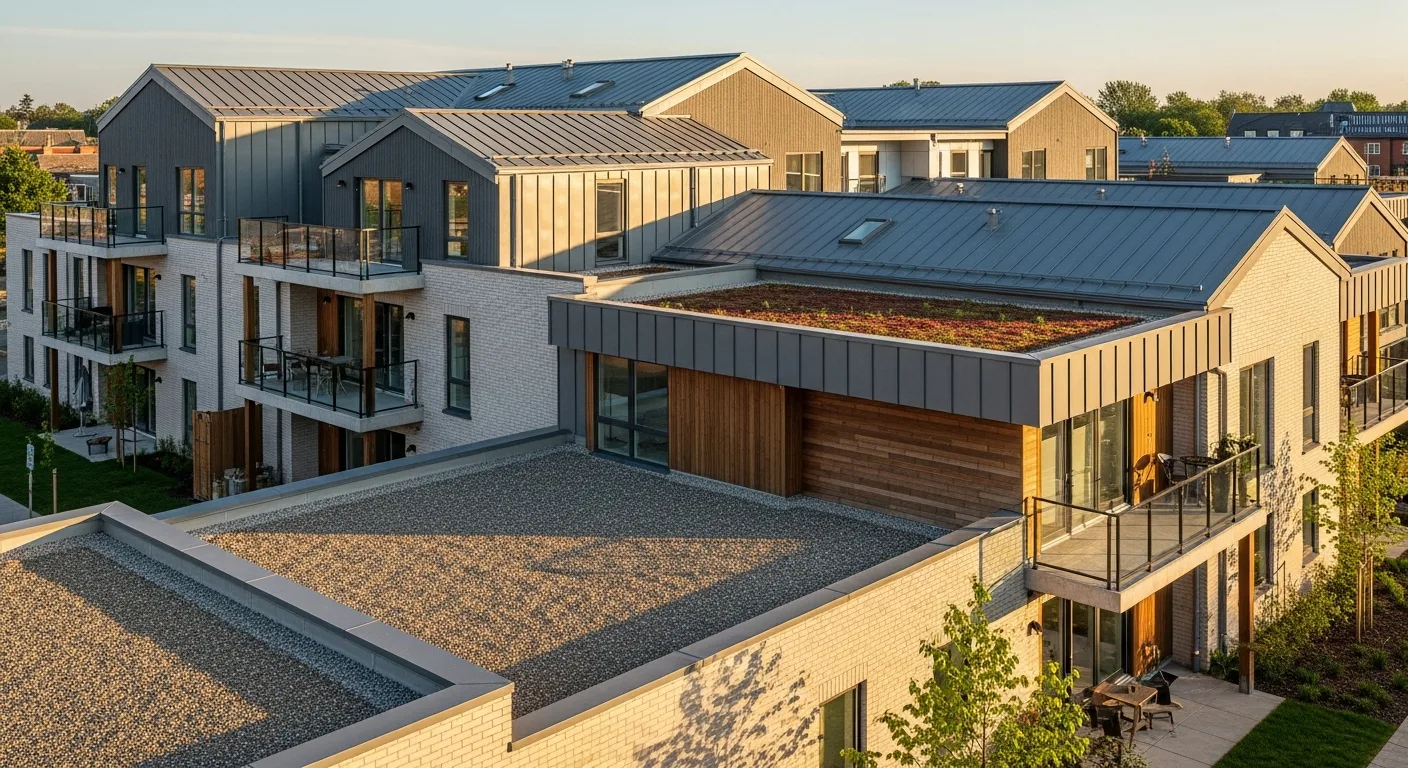
For flat or low-slope apartment complex roofing, TPO (Thermoplastic Polyolefin) and EPDM (Ethylene Propylene Diene Monomer) membranes offer excellent solutions for Texas Panhandle conditions. TPO's white reflective surface helps reduce cooling costs during brutal summer months, while EPDM provides exceptional durability against temperature cycling.
These single-ply membrane systems, when properly installed with adequate fastening patterns, can withstand the high winds common to the region. The National Roofing Contractors Association (NRCA) recommends enhanced attachment methods in high-wind zones, which includes most of the Texas Panhandle.
Modified Bitumen Options
Modified bitumen systems provide another excellent option for apartment roofing applications in harsh climates. These systems offer superior puncture resistance and can handle thermal cycling better than many alternatives. The granulated surface caps provide additional protection against UV degradation and hail impact.
For apartment complex owners concerned about long-term performance, modified bitumen's track record in extreme weather conditions makes it a reliable choice. The self-healing properties of quality modified bitumen can help seal minor punctures that might occur during maintenance activities.
Energy Efficiency and Cost Considerations
Energy efficiency plays a crucial role in apartment complex profitability, especially in the Texas Panhandle where cooling costs can represent a significant portion of operating expenses. Cool roofing systems can dramatically reduce heat island effects and lower interior temperatures, directly impacting utility costs for both owners and tenants.
The U.S. Department of Energy reports that cool roofing systems can reduce peak cooling demand by 10-15% in hot climates. For apartment complex owners, this translates to substantial savings when multiplied across multiple units and compounded over the life of the roofing system.
White TPO membranes, reflective coatings, and light-colored granulated surfaces can all contribute to improved energy performance. When combined with proper insulation, these systems create a thermal barrier that benefits both summer cooling and winter heating efficiency.
Long-term Investment Analysis
While initial costs are important, apartment complex owners must consider total lifecycle costs when selecting roofing systems. A quality multi-family roofing system may have higher upfront costs but can provide decades of reliable service with minimal maintenance requirements.
Warranty considerations are equally important, as manufacturer warranties can provide protection against material defects and workmanship issues. Leading manufacturers like GAF and Owens Corning offer comprehensive warranty programs specifically designed for commercial and multi-family applications.
Maintenance and Inspection Programs
Proactive maintenance is essential for maximizing roofing system performance and preventing costly emergency repairs that can disrupt tenant comfort. Apartment complex owners should establish regular inspection schedules, particularly after severe weather events common in the Texas Panhandle.
Bi-annual inspections should focus on common problem areas including membrane seams, penetrations, drains, and edge details. Early detection of minor issues can prevent water intrusion and the extensive damage that often follows. Documentation of inspection findings and maintenance activities also supports warranty claims and insurance requirements.
Seasonal Preparation
The extreme weather patterns in the Texas Panhandle require seasonal preparation strategies. Spring preparation should focus on clearing drainage systems and checking for winter damage, while fall preparations should ensure the roofing system is ready for potential ice and snow loads.
During hail season, having a qualified roofing contractor perform post-storm inspections can identify damage before it leads to leaks. The Insurance Institute for Business & Home Safety (IBHS) provides excellent resources for property owners on storm preparation and damage assessment.
Regulatory and Code Compliance
Texas building codes and local ordinances in Panhandle communities often have specific requirements for multi-family roofing systems. These may include enhanced wind resistance requirements, fire ratings, and energy efficiency standards that apartment complex owners must meet.
Working with experienced commercial roofing contractors familiar with local codes ensures compliance and helps avoid costly corrections or delays. Code requirements may also impact insurance rates and coverage options, making compliance both a legal and financial consideration.
Working with Professional Roofing Contractors
The complexity of apartment complex roofing systems requires professional expertise for both installation and maintenance. When selecting a roofing contractor, apartment complex owners should verify licensing, insurance coverage, manufacturer certifications, and local experience with similar properties.
For significant roofing projects, including roof replacement initiatives, obtaining multiple detailed proposals allows for proper comparison of materials, installation methods, and warranty offerings. Quality contractors will provide comprehensive proposals that address specific site conditions and performance requirements.
Emergency service capabilities are particularly important for apartment complex owners, as roofing emergencies can affect multiple tenants simultaneously. Establishing relationships with qualified contractors before emergencies occur ensures rapid response when urgent repairs are needed.
The Texas Panhandle's challenging climate demands thoughtful roofing decisions that balance initial costs, long-term performance, and maintenance requirements. By understanding regional weather patterns, selecting appropriate materials, and establishing proper maintenance programs, apartment complex owners can protect their investments while providing reliable shelter for their tenants. Professional guidance throughout the process ensures optimal results and long-term satisfaction with roofing system performance.
Wind resistance is another critical factor for apartment complex roofing in the Texas Panhandle, where sustained winds regularly exceed 40 mph and storm events can produce gusts over 80 mph. The National Wind Institute at Texas Tech University has extensively studied wind patterns across the region, documenting how the flat topography creates minimal wind barriers, allowing storms to maintain intensity across vast distances. This research has directly influenced modern building codes and roofing standards for the area.
For apartment complexes, selecting roofing materials with appropriate impact ratings is essential. Class 4 impact-resistant shingles, such as TAMKO's Heritage and Titan series, are specifically engineered to withstand the severe hail conditions common to Hail Alley. These products undergo rigorous testing using steel balls dropped from specific heights to simulate hail impact, with Class 4 representing the highest level of impact resistance available for residential roofing materials.
Energy efficiency considerations are equally important given the region's extreme temperature swings and high cooling costs. Cool Roof Rating Council standards show that highly reflective roofing systems can reduce surface temperatures by 50-60°F compared to traditional dark materials. For large apartment complexes, this translates to significant reductions in HVAC loads and tenant utility costs, making energy-efficient roofing a valuable amenity for attracting and retaining residents.
Commercial-grade membrane systems like TPO and EPDM are increasingly popular for apartment complex flat roof areas and common buildings. Carlisle SynTec's TPO membrane systems offer exceptional durability against UV radiation and thermal cycling, critical factors in the intense Texas Panhandle sun. These single-ply systems also provide superior wind uplift resistance when properly installed with appropriate fastening schedules specified by the Single Ply Roofing Industry (SPRI) for high-wind zones.
Compliance with local building codes is mandatory, and the International Building Code requirements for wind speed design in the Texas Panhandle typically require roofing systems to withstand wind speeds of 90-110 mph depending on the specific location. The Insurance Institute for Business & Home Safety (IBHS) FORTIFIED standards go beyond minimum code requirements, providing additional guidelines that can result in insurance premium reductions for apartment complex owners who implement these enhanced protection measures.