When selecting a commercial roofing membrane for your building in Amarillo, Texas, the choice between PVC and TPO systems can significantly impact your property's performance, energy efficiency, and long-term maintenance costs. While both single-ply roofing options offer excellent benefits, understanding when PVC roofing systems outperform TPO can help you make the most informed decision for your specific building requirements and environmental conditions.
Understanding PVC and TPO Roofing Fundamentals
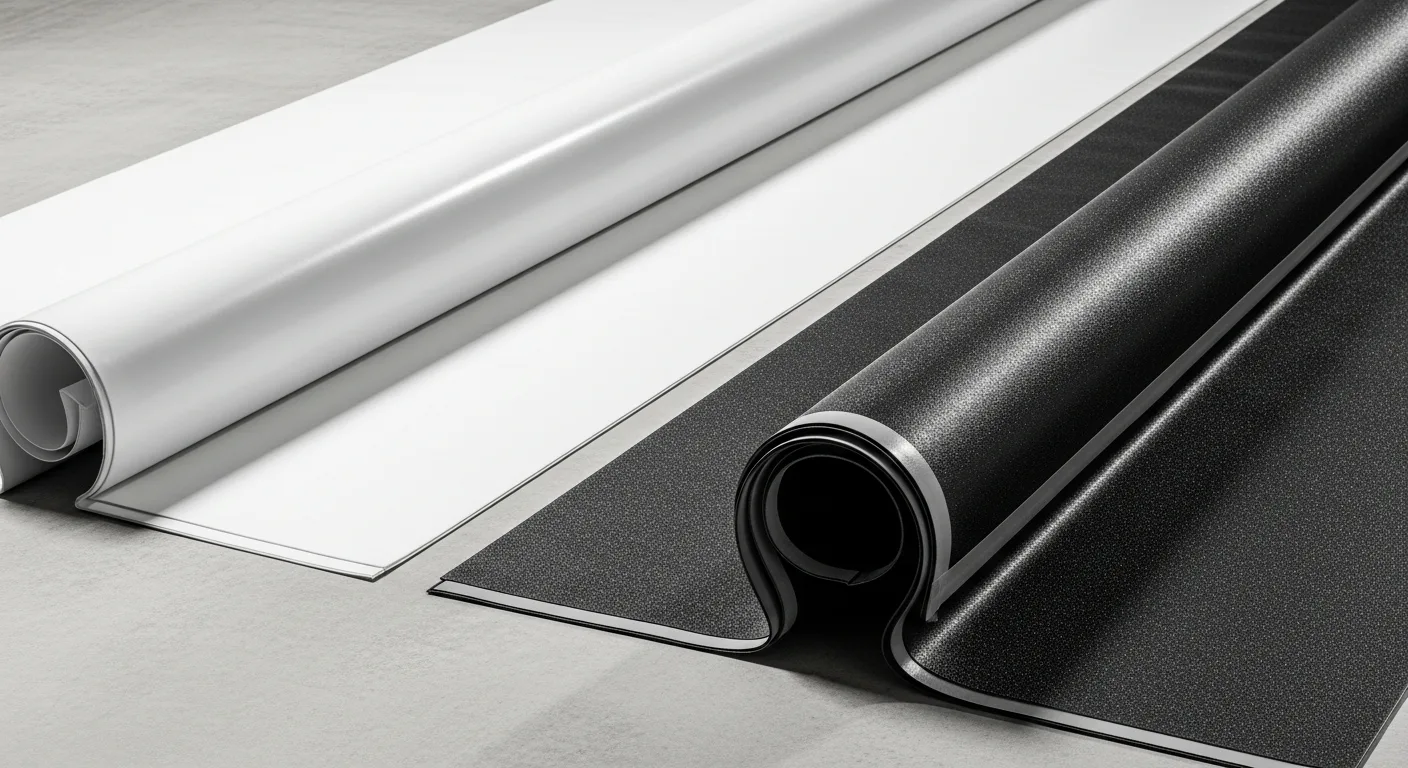
Both PVC (polyvinyl chloride) and TPO (thermoplastic polyolefin) belong to the thermoplastic roofing family, offering heat-weldable seams and excellent weather resistance. However, their chemical compositions create distinct performance characteristics that make each suitable for different applications.
PVC roofing systems have been proven in commercial applications for over 40 years, with many original installations still performing effectively today. The material's inherent chemical resistance and durability have made it a preferred choice for buildings exposed to harsh environmental conditions. Meanwhile, TPO roofing systems, while newer to the market, have gained popularity due to their cost-effectiveness and energy-efficient white reflective surface.
The National Roofing Contractors Association recognizes both systems as viable commercial roofing solutions, but emphasizes the importance of selecting the right membrane based on specific building requirements and environmental factors.
Chemical Resistance and Environmental Durability
One of the most significant advantages of PVC roofing systems over TPO lies in their superior chemical resistance. PVC membranes contain plasticizers that provide flexibility while maintaining excellent resistance to chemicals, oils, and grease. This makes PVC the clear choice for restaurants, manufacturing facilities, and buildings near industrial areas where chemical exposure is a concern.
In Amarillo's challenging climate, where buildings face intense UV radiation, hail storms, and temperature fluctuations, PVC's proven track record of long-term performance becomes particularly valuable. The membrane's ability to resist punctures, tears, and chemical degradation ensures consistent protection even under extreme weather conditions.
When PVC Outperforms TPO: Specific Applications
Restaurant and Food Service Facilities
Restaurants and food processing facilities represent the clearest case where PVC systems significantly outperform TPO. The constant exposure to cooking oils, grease, and cleaning chemicals that escape through exhaust systems can cause TPO membranes to deteriorate prematurely. PVC's chemical resistance ensures the roofing system maintains its integrity despite regular exposure to these substances.
Additionally, restaurants often require frequent rooftop maintenance for HVAC equipment, grease traps, and exhaust systems. PVC's superior puncture resistance and ability to withstand foot traffic make it the more durable choice for these high-maintenance environments.
Industrial and Manufacturing Buildings
Manufacturing facilities, chemical plants, and industrial buildings benefit significantly from PVC's chemical resistance properties. TPO membranes can experience degradation when exposed to industrial chemicals, solvents, or airborne contaminants common in these environments.
The Department of Energy emphasizes the importance of selecting roofing materials that maintain their performance characteristics throughout their service life, particularly in industrial applications where roof replacement can be extremely disruptive to operations.
Buildings in Harsh Environmental Conditions
While both PVC and TPO perform well in various climates, PVC demonstrates superior performance in areas with extreme temperature fluctuations, high pollution levels, or frequent severe weather events. The membrane's proven durability over decades of real-world performance provides confidence for building owners facing challenging environmental conditions.
According to FEMA guidelines, selecting roofing materials with proven long-term performance in severe weather conditions is crucial for buildings in areas prone to extreme weather events.
Performance Advantages of PVC Systems
Superior Welding and Seam Integrity
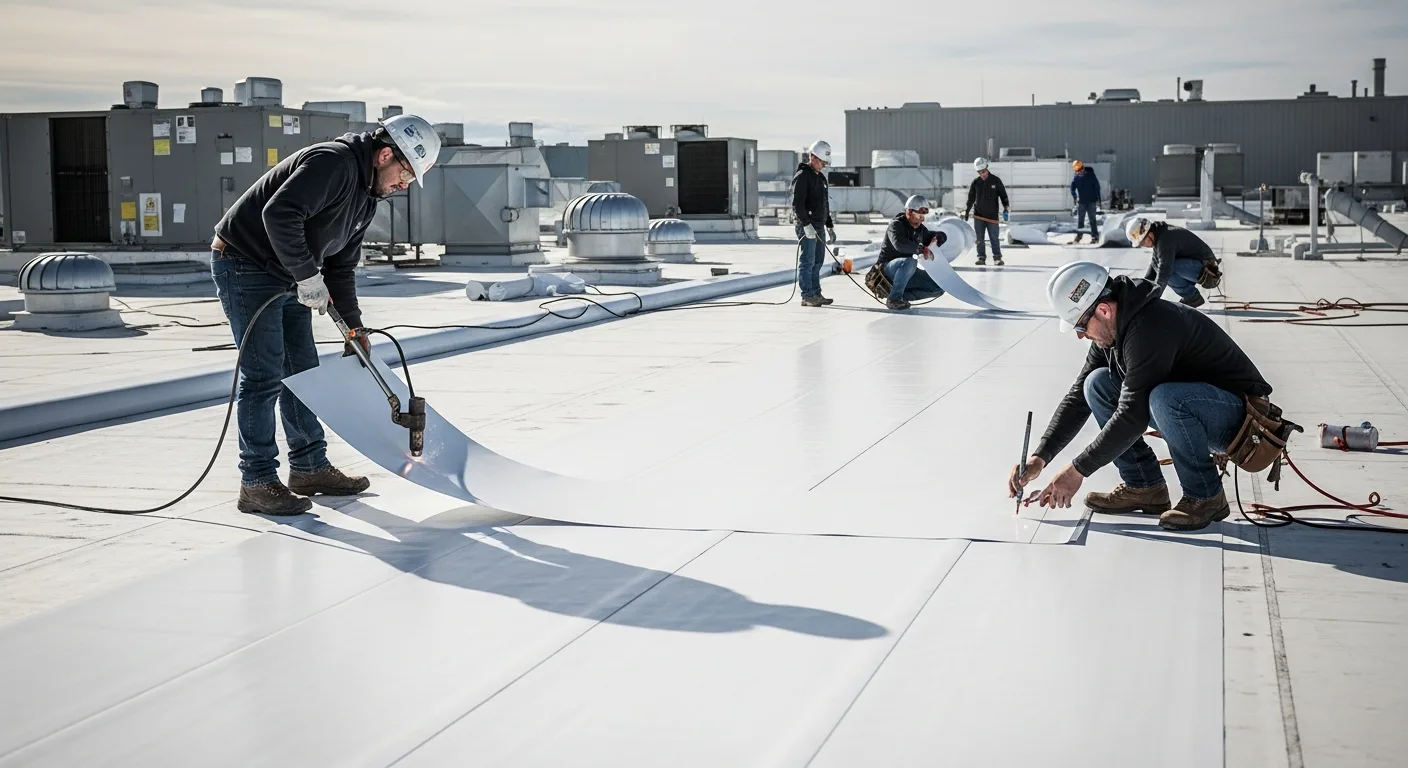
PVC membranes typically achieve stronger, more reliable seam welds compared to TPO systems. The chemical composition of PVC allows for deeper penetration during the heat-welding process, creating seams that often prove stronger than the base membrane material itself. This superior seam integrity reduces the likelihood of leaks and extends the system's service life.
Professional installation teams often prefer working with PVC because of its forgiving welding characteristics and the visual cues that indicate proper seam formation. This translates to more consistent installation quality and fewer callback issues.
Proven Longevity and Performance Track Record
With over four decades of commercial application data, PVC roofing systems have demonstrated exceptional longevity. Many original PVC installations from the 1970s and 1980s continue to perform effectively today, providing real-world evidence of the material's durability.
The Insurance Institute for Business & Home Safety recognizes the importance of selecting building materials with proven performance records, particularly for critical building envelope components like roofing systems.
Maintenance and Repair Considerations
PVC systems often prove easier to maintain and repair compared to TPO membranes. The material's compatibility with various adhesives and repair methods provides building owners with more options for addressing minor issues before they become major problems. Additionally, PVC's resistance to chemical degradation means that routine cleaning and maintenance activities are less likely to damage the membrane.
Cost Considerations and Return on Investment
While PVC systems typically require a higher initial investment compared to TPO, the long-term cost analysis often favors PVC in appropriate applications. The superior durability, reduced maintenance requirements, and extended service life can result in lower total cost of ownership over the roof's lifecycle.
For buildings where chemical resistance is crucial, the cost of premature TPO replacement due to chemical exposure often exceeds the initial premium for PVC installation. Building owners should consider not just the upfront costs but also the potential expenses associated with roof failure, business disruption, and premature replacement.
Energy Efficiency and Building Performance
Both PVC and TPO systems offer excellent energy efficiency through their reflective surfaces, but PVC's proven ability to maintain its reflective properties over time provides consistent energy savings throughout the roof's service life. Some PVC formulations also offer enhanced thermal performance characteristics that can further improve building energy efficiency.
Leading manufacturers like GAF and Owens Corning offer both PVC and TPO systems, but their technical documentation often highlights PVC's advantages in challenging applications.
Making the Right Choice for Your Building
Selecting between PVC and TPO requires careful consideration of your building's specific requirements, environmental conditions, and long-term objectives. While TPO systems offer excellent value for many commercial applications, PVC systems prove superior when chemical resistance, maximum durability, or proven long-term performance are priorities.
When evaluating commercial roofing options, consider factors such as building use, environmental exposure, maintenance accessibility, and total lifecycle costs rather than focusing solely on initial installation costs.
Professional roofing contractors can help assess your specific situation and recommend the most appropriate membrane system based on your building's unique requirements. The investment in the right roofing system pays dividends through reduced maintenance costs, extended service life, and reliable building protection for decades to come.
For buildings in Amarillo's challenging climate, particularly those with chemical exposure concerns or demanding performance requirements, PVC roofing systems often represent the superior long-term investment despite higher initial costs.
In the Texas Panhandle's harsh climate, where temperatures can exceed 100°F for extended periods and severe hailstorms are common, PVC roofing systems demonstrate superior performance in several critical areas. The region's intense UV exposure and extreme temperature fluctuations require roofing materials that can withstand thermal cycling without compromising membrane integrity. Sika Sarnafil PVC membranes are engineered specifically for these demanding conditions, offering enhanced plasticizer retention that prevents brittleness over time.
Chemical resistance becomes particularly important for commercial buildings in Amarillo's industrial and agricultural sectors. PVC roofing systems excel when exposed to grease, oils, and other chemicals that commonly affect restaurants, manufacturing facilities, and agricultural processing plants. Unlike TPO, which can be susceptible to certain hydrocarbon-based substances, PVC maintains its structural integrity even under chemical exposure. SPRI standards specify testing protocols for chemical resistance that highlight PVC's superior performance in these applications.
Wind uplift resistance is crucial in the Texas Panhandle, where sustained winds regularly exceed 25 mph and storm events can produce gusts over 70 mph. PVC systems typically achieve higher wind uplift ratings due to their superior seam strength and puncture resistance. National Severe Storms Laboratory research indicates that the Texas Panhandle experiences some of the nation's most severe hailstorms, making puncture resistance a critical factor. PVC membranes demonstrate superior impact resistance compared to TPO, particularly important for buildings in Amarillo's high-risk hail zone.
From a building code perspective, both PVC and TPO systems must comply with International Building Code requirements for fire resistance and structural performance. However, PVC's inherent flame retardant properties often provide additional safety margins. Energy efficiency considerations also favor PVC in certain applications, as Department of Energy studies show that while both materials offer excellent reflectivity, PVC's dimensional stability helps maintain consistent thermal performance over the membrane's lifespan.
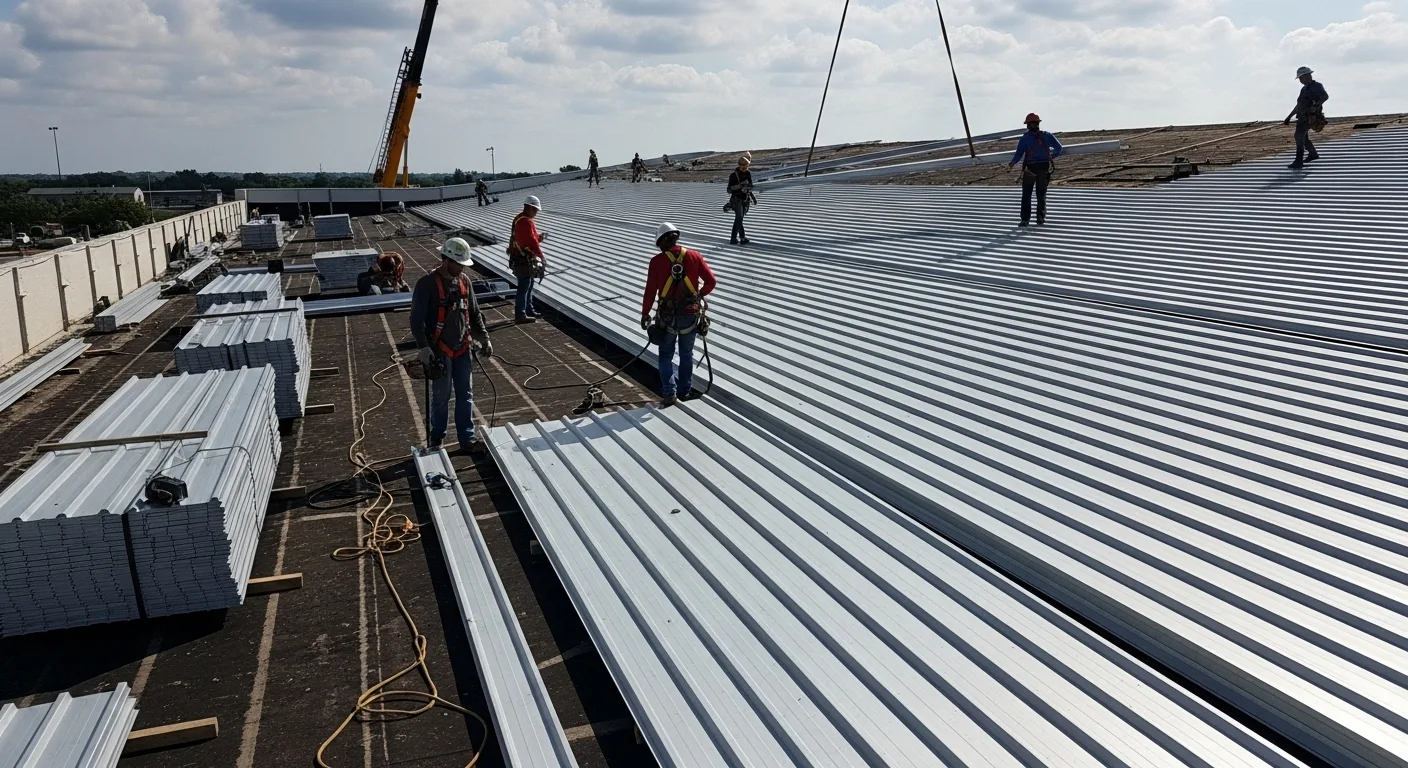
Installation quality becomes even more critical in Texas Panhandle conditions, where extreme weather can quickly exploit any membrane weaknesses. NRCA guidelines emphasize proper installation techniques for thermoplastic membranes, particularly regarding seam welding in high-temperature conditions. PVC systems generally provide wider temperature windows for proper installation, reducing the risk of installation-related failures that could compromise your building's weather protection.