In the competitive world of commercial real estate, office building owners and property managers are constantly seeking ways to reduce operational costs while maintaining tenant satisfaction. While many focus on HVAC upgrades, lighting retrofits, and energy-efficient windows, there's one critical building component that often flies under the radar: the roof coating system. Despite being one of the most cost-effective improvements available, roof coatings remain the commercial real estate industry's best-kept secret for generating substantial long-term savings.
The Hidden Costs of Neglecting Your Office Building's Roof
Most office building owners view their roof as an out-of-sight, out-of-mind component until problems arise. This reactive approach can be financially devastating. According to the National Roofing Contractors Association, commercial roof replacement costs can range from $5 to $15 per square foot, making a complete roof replacement for a typical 50,000 square foot office building a $250,000 to $750,000 investment.
However, the true cost extends beyond the initial replacement expense. During roof replacement, office buildings often experience:
- Business disruption and potential tenant displacement
- Lost rental income during construction periods
- Increased insurance premiums due to exposed building conditions
- Emergency leak repairs that can damage expensive office equipment and furnishings
- Potential liability issues from water damage to tenant property
These hidden costs can easily double the financial impact of roof replacement, making proactive maintenance and coating applications a smart business decision for any office building roofing strategy.
How Roof Coatings Transform Office Building Economics
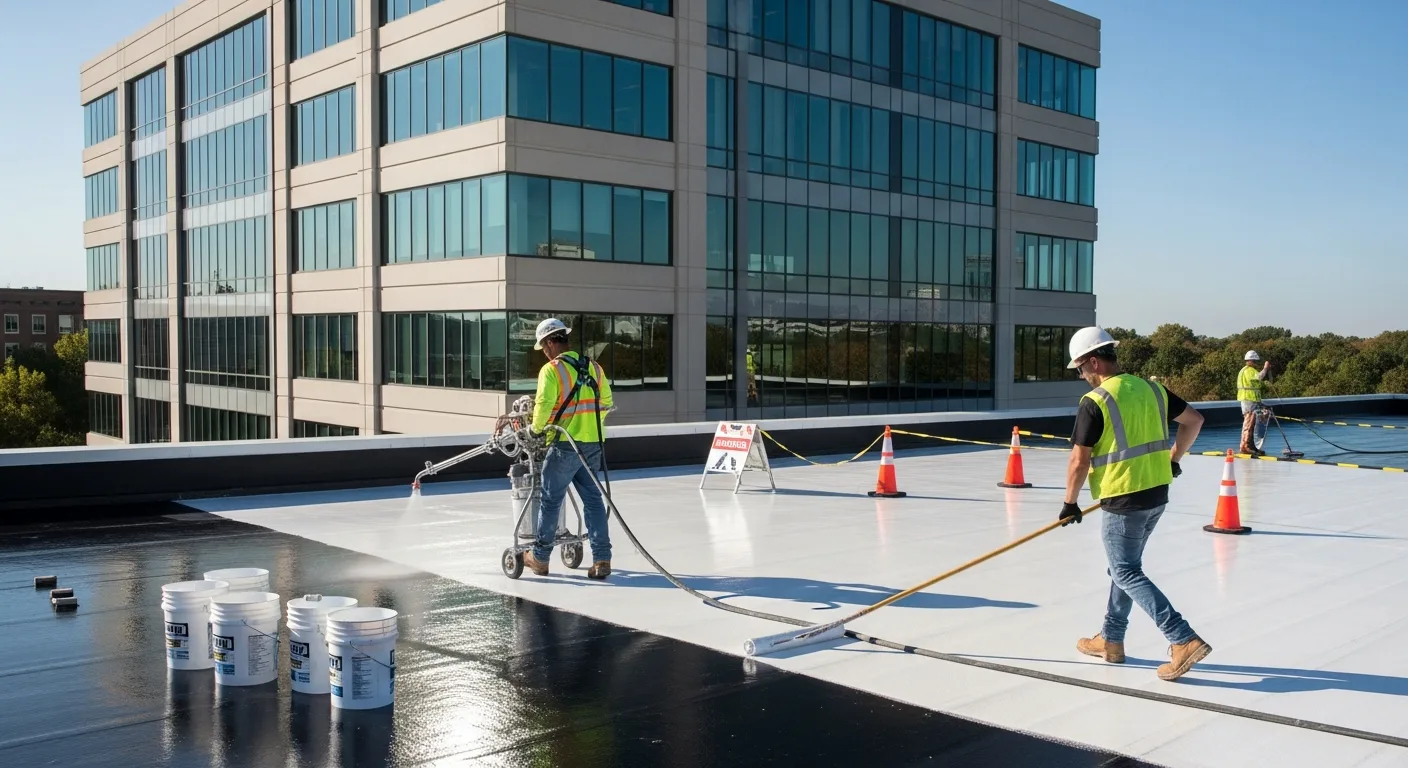
Roof coatings represent a paradigm shift from reactive to proactive roof management. These liquid-applied membranes create a seamless, waterproof barrier that can extend roof life by 10-20 years while providing immediate operational benefits. For office buildings, this translates to significant financial advantages that compound over time.
Immediate Cost Savings
The most obvious benefit of roof coatings is their cost-effectiveness compared to replacement. While roof replacement can cost $10-15 per square foot, quality roof coatings typically cost $2-4 per square foot installed. This represents an immediate 60-80% cost savings compared to replacement, allowing building owners to preserve capital for other property improvements or investments.
Additionally, roof coating application is significantly less disruptive than replacement. Most coating projects can be completed without interfering with normal office operations, eliminating the costly business interruptions associated with traditional roof replacement.
Long-term Asset Protection
Beyond immediate savings, roof coatings provide substantial long-term value protection. The U.S. Department of Energy recognizes roof coatings as an effective building improvement that can significantly extend roof service life while improving building performance.
Quality roof coatings protect the underlying roof membrane from UV degradation, thermal cycling, and weather-related wear. This protection is particularly valuable for office buildings, which often have sensitive electronic equipment and valuable tenant improvements that could be damaged by roof leaks.
Energy Efficiency: The Compound Savings Effect
Perhaps the most underestimated benefit of roof coatings for office buildings is their impact on energy costs. Cool roof coatings can reflect 70-90% of solar radiation, compared to traditional dark roofing materials that may reflect only 10-20%. This dramatic improvement in solar reflectance translates directly to reduced cooling costs.
For a typical office building in Amarillo's hot climate, cool roof coatings can reduce peak cooling demand by 10-30%, resulting in substantial energy savings. The Department of Energy estimates that cool roofs can reduce annual cooling energy use by 7-15% in buildings where air conditioning represents a significant portion of energy costs.
Calculating Real-World Energy Savings
Consider a 75,000 square foot office building with annual cooling costs of $45,000. A 15% reduction in cooling energy would save $6,750 annually. Over a 15-year coating lifespan, this represents over $101,000 in energy savings alone – often enough to pay for the coating application multiple times over.
These savings become even more significant when considering utility rebates and incentives. Many Texas utilities offer rebates for cool roof installations, further reducing the initial investment required for coating application.
Maintenance and Operational Benefits
Roof coatings provide operational advantages that extend far beyond simple cost savings. For office building managers, these benefits translate to reduced headaches and improved tenant satisfaction.
Reduced Maintenance Requirements
Coated roofs require significantly less maintenance than uncoated systems. The seamless membrane eliminates many potential leak points, reducing the frequency and urgency of roof repairs. This predictability allows property managers to better budget for roof maintenance and reduces the risk of emergency repair situations that can disrupt office operations.
Improved Indoor Comfort
Cool roof coatings don't just reduce energy costs – they improve indoor comfort by reducing heat gain through the roof assembly. This means more consistent temperatures throughout the building, fewer hot spots on upper floors, and improved tenant satisfaction. Happy tenants are more likely to renew leases and recommend the building to others, directly impacting occupancy rates and rental income.
Environmental and Sustainability Benefits
Today's office tenants increasingly prioritize sustainability and environmental responsibility. Roof coatings support these goals while providing tangible business benefits. The Insurance Institute for Business & Home Safety recognizes roof coatings as an effective strategy for improving building resilience and reducing environmental impact.
By extending existing roof life, coatings reduce the volume of roofing materials sent to landfills. Additionally, the energy savings achieved through cool roof coatings directly reduce the building's carbon footprint. For office buildings seeking LEED certification or other sustainability ratings, roof coatings can contribute valuable points toward certification goals.
Future-Proofing Your Investment
As energy costs continue to rise and environmental regulations become more stringent, buildings with efficient roof systems will have a competitive advantage in the marketplace. Roof coatings represent a proactive investment in the building's future marketability and value.
Choosing the Right Coating System
Not all roof coatings are created equal, and selecting the appropriate system requires careful consideration of building-specific factors. Leading manufacturers like GAF and Owens Corning offer various coating formulations designed for different roof types and climate conditions.
For office buildings, key considerations include:
- Existing roof membrane type and condition
- Building height and wind exposure
- Local climate conditions and weather patterns
- Desired coating lifespan and warranty requirements
- Budget constraints and ROI expectations
Working with experienced commercial roofing contractors ensures proper system selection and installation, maximizing the coating's performance and longevity.
The Bottom Line: ROI That Makes Sense
When evaluated comprehensively, roof coatings represent one of the highest-return investments available to office building owners. The combination of immediate cost savings, ongoing energy reductions, reduced maintenance requirements, and extended roof life creates a compelling financial case that's difficult to ignore.
For a typical office building, the return on investment for quality roof coatings often exceeds 200-400% over the coating's lifespan. This ROI comes from multiple sources: avoided replacement costs, energy savings, reduced maintenance expenses, and improved tenant satisfaction.
Moreover, roof coatings provide predictable, long-term benefits that help stabilize building operating costs – a significant advantage in today's uncertain economic environment. While other building improvements may offer modest benefits or uncertain returns, roof coatings deliver proven, measurable results that directly impact the bottom line.
The question isn't whether office building owners can afford to invest in roof coatings – it's whether they can afford not to. In an industry where every dollar of operational savings translates directly to improved property value and investment returns, roof coatings represent the most overlooked opportunity for substantial, long-term savings.
Texas Panhandle Climate Challenges and Coating Solutions
The Texas Panhandle's extreme climate presents unique challenges for office building roofs that make protective coatings even more critical. With summer temperatures regularly exceeding 100°F and intense UV radiation, traditional roofing systems experience accelerated aging and thermal cycling stress. According to the National Weather Service, the Amarillo region also faces severe hail storms and sustained winds over 70 mph, making roof protection a year-round concern rather than a seasonal consideration.
Modern roof coating systems address these climate-specific challenges through advanced reflective technology. Cool Roof Rating Council certified coatings can achieve solar reflectance values of 0.80 or higher, dramatically reducing surface temperatures by 50-80°F compared to uncoated roofs. This thermal reduction not only extends membrane life but also significantly reduces HVAC loads during peak summer months when utility costs are highest.
Industry Standards and Performance Specifications
Professional roof coating applications must meet stringent industry standards to ensure long-term performance. The Roof Coatings Manufacturers Association has established comprehensive guidelines for coating thickness, adhesion strength, and weather resistance that directly impact warranty coverage and expected service life. Quality coating systems typically require minimum dry film thickness of 20-30 mils for elastomeric coatings and must demonstrate tensile strength exceeding 200 psi.
For office buildings in Texas, coatings must also comply with local energy codes and may contribute to LEED certification through the U.S. Green Building Council's sustainable building requirements. Additionally, ASTM International testing standards ensure coating systems can withstand ponding water, thermal shock, and UV exposure typical of commercial flat roof applications.
Safety and Code Compliance Considerations
Professional coating installation requires adherence to OSHA safety standards for fall protection and chemical handling, particularly when working with solvent-based products. Proper surface preparation, primer application, and multi-coat systems are essential for achieving manufacturer warranty coverage and ensuring long-term adhesion performance that can withstand the Panhandle's extreme weather cycles.