Churches present unique roofing challenges that require specialized expertise and careful consideration of both functional and aesthetic requirements. From historic sanctuaries with steep-pitched roofs to modern worship centers featuring expansive flat systems, each roofing type brings distinct advantages and challenges. Understanding these differences is crucial for church leadership making informed decisions about their facility's roofing needs.
Understanding Church Roofing Requirements
Churches face distinctive roofing challenges that commercial and residential properties typically don't encounter. Large congregational spaces require expansive roof coverage, often combining multiple roof types within a single structure. Additionally, many churches operate on limited budgets while needing roofing systems that can withstand decades of service without major repairs.
The architectural significance of religious buildings adds another layer of complexity. Historic churches may have preservation requirements that limit material choices and installation methods. Even contemporary church designs often feature striking architectural elements that demand specialized roofing expertise. Professional church roofing contractors understand these unique requirements and can navigate the challenges effectively.
Weather protection is paramount for churches, as roof failures can damage irreplaceable artwork, musical instruments, and sacred furnishings. The Federal Emergency Management Agency (FEMA) emphasizes that proper roofing is essential for protecting religious facilities from severe weather events that are becoming increasingly common.
Steep-Slope Roofing Systems for Churches
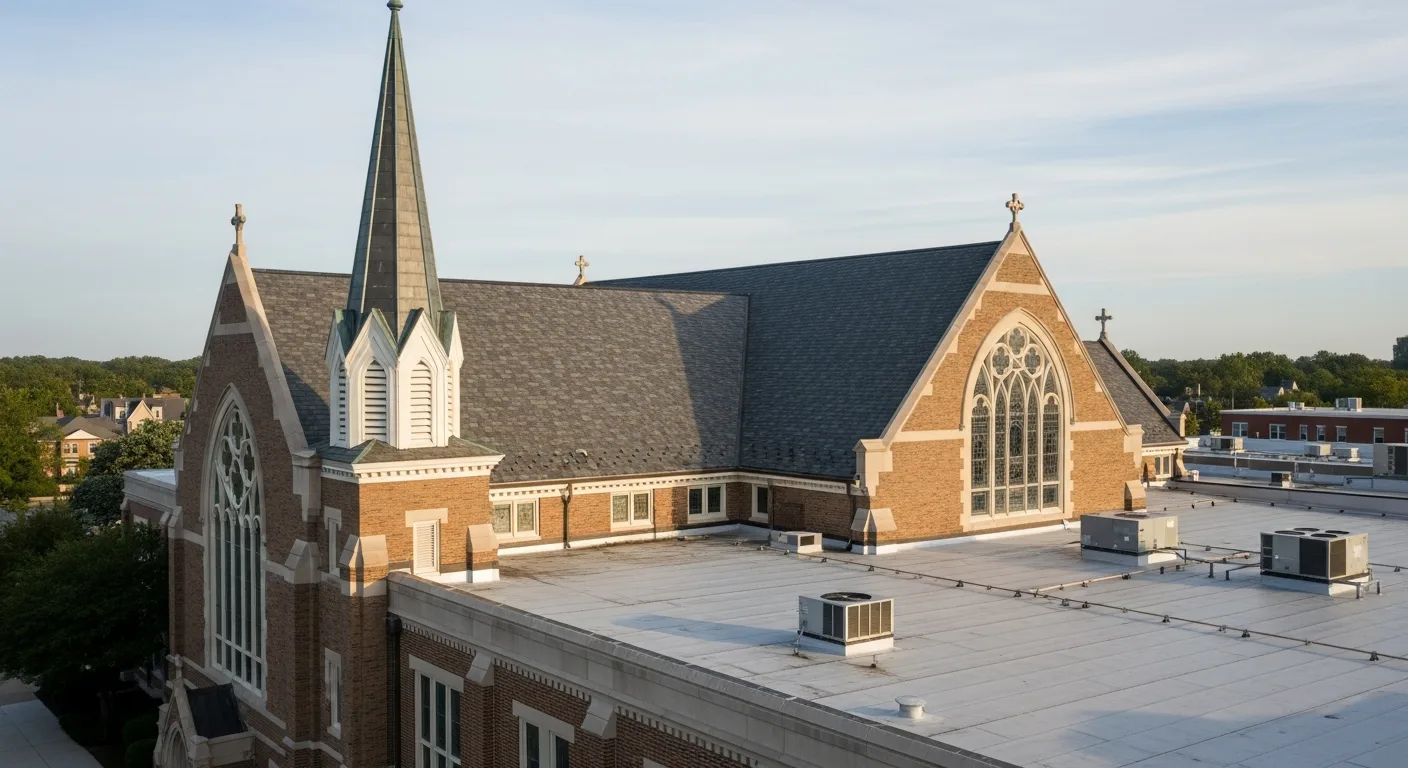
Traditional church architecture often features steep-sloped roofs with pitches exceeding 3:12, creating the classic cathedral silhouette that defines many religious buildings. These systems offer several advantages for church applications, including superior water drainage, enhanced architectural appeal, and compatibility with traditional roofing materials like slate, clay tiles, and architectural shingles.
Advantages of Steep-Slope Church Roofs
Steep slopes naturally shed water and debris more effectively than flat systems, reducing the risk of ponding water and ice dam formation. This characteristic is particularly important for churches in climates with significant precipitation or freeze-thaw cycles. The pitched design also creates natural ventilation opportunities that can improve indoor air quality and reduce cooling costs.
From an aesthetic standpoint, steep-slope roofs align with traditional church architecture and can accommodate decorative elements like dormers, cupolas, and bell towers. These features contribute to the building's visual impact and community recognition while serving functional purposes.
The National Roofing Contractors Association (NRCA) notes that properly installed steep-slope systems can provide 30-50 years of service life, making them cost-effective for churches planning long-term facility use.
Challenges with Steep-Slope Church Roofs
However, steep-slope systems present unique challenges for church applications. Installation and maintenance require specialized safety equipment and experienced contractors comfortable working at significant heights. The complex geometries common in church architecture can create numerous penetrations and transitions that require careful waterproofing.
Snow loading can be problematic in northern climates, as steep roofs may shed snow rapidly, creating safety hazards around building entrances. Additionally, the larger surface area of pitched roofs typically results in higher material costs compared to flat alternatives covering the same building footprint.
Professional steep slope roofing installation is essential for churches, as the complex architectural details and safety requirements demand experienced contractors with proper equipment and training.
Flat Roof Systems for Modern Churches
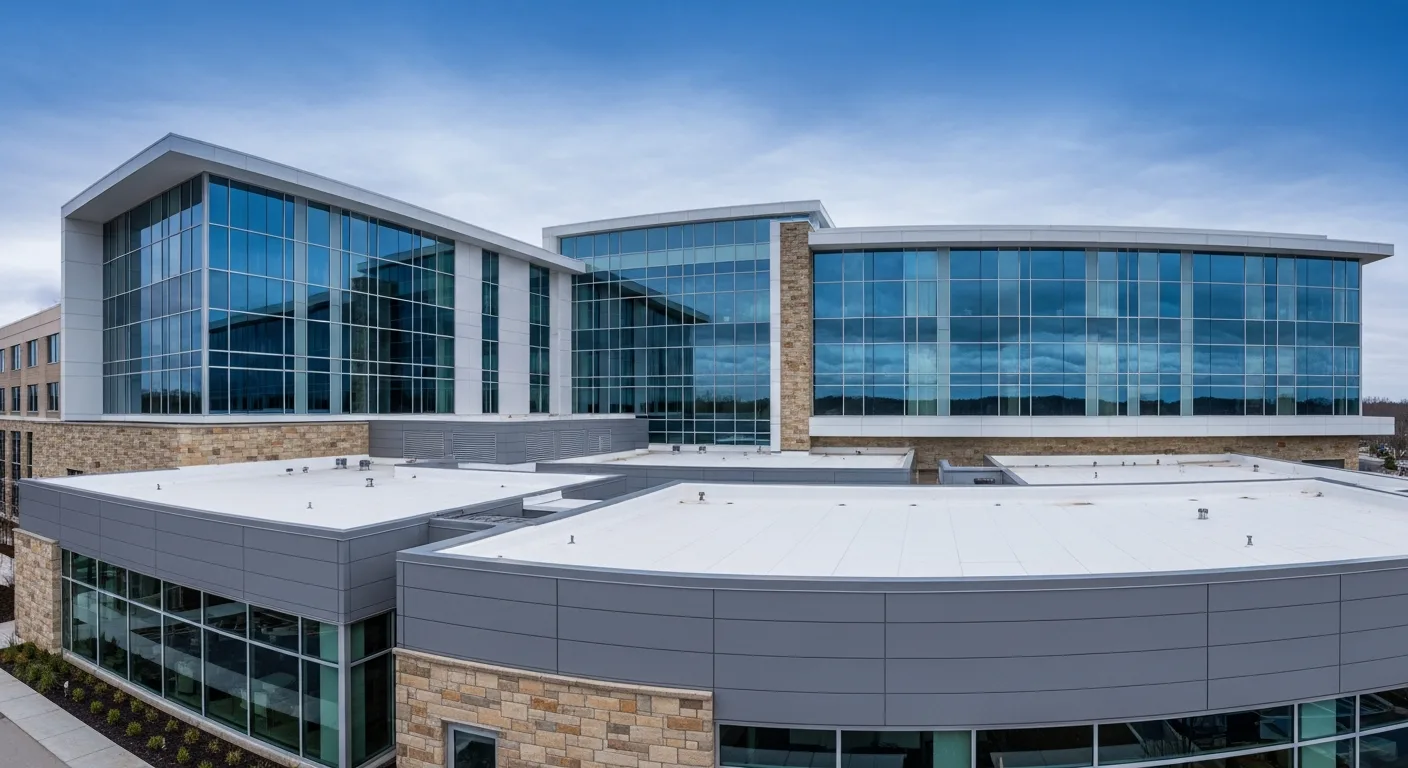
Contemporary church design increasingly incorporates flat or low-slope roofing systems, particularly for fellowship halls, educational wings, and modern sanctuary designs. These systems offer distinct advantages for churches, including cost-effective coverage of large areas, simplified HVAC installation, and potential for rooftop equipment placement.
Benefits of Flat Church Roofing
Flat roofs provide economical coverage for large spans common in church construction. Modern membrane systems like EPDM, TPO, and modified bitumen offer excellent weather protection while accommodating the thermal movement inherent in large roof areas. The Department of Energy recognizes cool roofing technologies that can significantly reduce cooling costs for large buildings like churches.
Maintenance access is simplified with flat systems, allowing for safer inspection and repair work. This accessibility is particularly valuable for churches managing their own maintenance programs or working with limited budgets for professional services.
Flat roofs also provide opportunities for mounting solar panels, HVAC equipment, and other building systems without compromising the building's appearance. This flexibility supports churches pursuing energy efficiency initiatives or expanding their facility infrastructure.
Flat Roof Challenges for Churches
Despite their advantages, flat roofs present specific challenges for church applications. Proper drainage is critical, as ponding water can lead to premature membrane failure and structural damage. The large spans typical in church construction can create deflection issues that affect drainage patterns over time.
Weather resistance requires careful attention to detail, particularly around penetrations for HVAC equipment, plumbing vents, and electrical conduits. The Firestone Building Products technical resources emphasize the importance of proper installation techniques for long-term performance.
Professional flat roofing installation and maintenance are essential for churches, as membrane systems require specialized knowledge and equipment for proper installation and repair.
Choosing the Right System for Your Church
Selecting between steep-slope and flat roofing systems requires careful consideration of multiple factors specific to each church's situation. Budget constraints, architectural requirements, climate conditions, and long-term maintenance capabilities all influence the decision-making process.
Climate Considerations
Regional weather patterns significantly impact roofing system performance and longevity. Churches in areas with heavy snowfall may benefit from steep slopes that naturally shed snow loads, while facilities in regions with intense sun exposure might prefer flat systems with cool roofing technologies.
The Insurance Institute for Business & Home Safety (IBHS) provides valuable research on how different roofing systems perform under various weather conditions, helping churches make informed decisions based on their local climate risks.
Budget and Maintenance Planning
Churches must balance initial installation costs with long-term maintenance requirements when selecting roofing systems. While steep-slope systems may have higher upfront costs due to complex installation requirements, they often require less frequent maintenance than flat systems.
Flat roofs typically offer lower initial costs for large areas but may require more regular maintenance and inspection to ensure proper drainage and membrane integrity. Churches should factor these ongoing costs into their long-term facility budgets.
Professional Installation and Maintenance
Regardless of the roofing system selected, professional installation and maintenance are crucial for achieving expected performance and longevity. Churches should work with contractors experienced in religious facility roofing who understand the unique requirements and challenges these buildings present.
Quality roofing manufacturers like GAF and Owens Corning provide comprehensive warranty programs and technical support for properly installed systems, offering churches additional protection for their roofing investment.
Regular inspection and preventive maintenance programs help churches maximize their roofing system's lifespan while minimizing emergency repair costs that can strain congregational budgets. Professional contractors can develop customized maintenance plans that address each church's specific roofing configuration and budget constraints.
By understanding the unique challenges and benefits of both steep-slope and flat roofing systems, church leadership can make informed decisions that protect their facilities while supporting their mission and financial stewardship responsibilities.
The Texas Panhandle's extreme weather conditions create particularly demanding requirements for church roofing systems. With frequent hail storms, high winds exceeding 70 mph, and intense UV exposure from over 275 sunny days annually, churches must prioritize impact-resistant materials and proper installation techniques. National Severe Storms Laboratory data shows the Amarillo region experiences some of the highest hail frequency in the nation, making impact resistance a critical specification for both steep-slope and flat roof systems.
For steep-slope applications, churches should consider Class 4 impact-resistant shingles that meet UL 2218 testing standards. These materials, such as polymer-modified asphalt shingles, provide superior resistance to hail damage while maintaining the traditional aesthetic many congregations prefer. Wind uplift resistance is equally important, with installations requiring compliance with local building codes that often mandate systems capable of withstanding winds up to 90 mph in the Texas Panhandle.
Flat roof systems on churches face unique challenges related to drainage and thermal cycling. The region's temperature swings from below freezing to over 100°F demand membrane systems with exceptional flexibility and UV resistance. TPO and EPDM membrane systems have proven effective for large church installations, offering superior puncture resistance and reflective properties that reduce cooling costs during Amarillo's intense summers.
Safety considerations for church roofing projects require strict adherence to OSHA fall protection standards, particularly given the complex geometries and heights typical of religious architecture. Professional contractors must implement comprehensive safety programs including proper scaffolding, harness systems, and weather monitoring protocols. The National Roofing Contractors Association guidelines emphasize the importance of specialized training for crews working on steep-slope church roofs, where pitch angles often exceed standard residential applications.
Energy efficiency has become increasingly important for churches managing operational budgets. Cool roof technologies can significantly reduce HVAC loads in large worship spaces, with reflective roofing systems reducing surface temperatures by up to 50°F compared to traditional materials. This consideration is particularly valuable for churches in the Texas Panhandle, where summer cooling costs can represent a substantial portion of facility operating expenses.