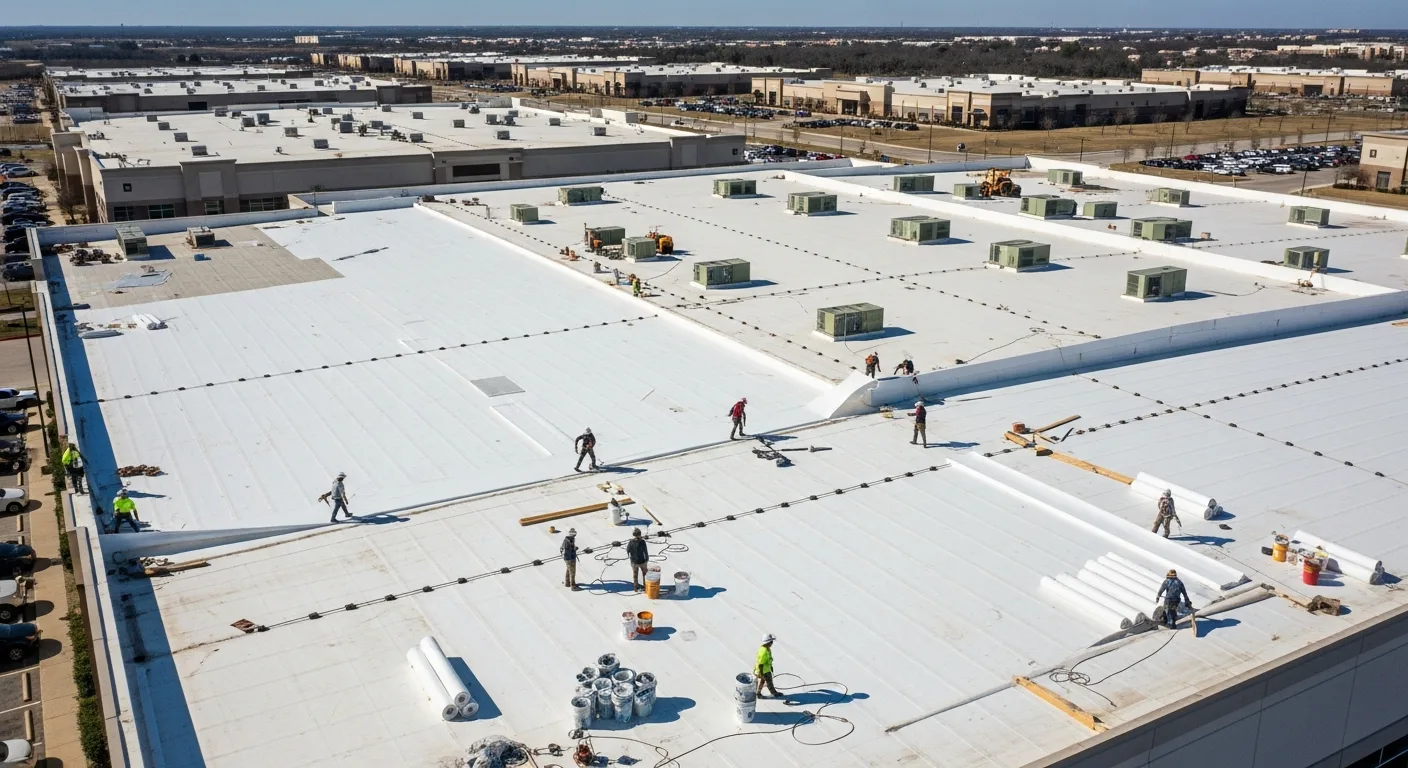
Commercial Roofing Solutions for Amarillo and the Texas Panhandle
When it comes to protecting your commercial investment in the Texas Panhandle, your roofing system stands as the first line of defense against some of the nation's most challenging weather conditions. From the bustling business districts of downtown Amarillo to the industrial complexes in Canyon and the agricultural facilities throughout Hereford, commercial properties face relentless assaults from baseball-sized hail, winds exceeding 60 mph, and temperature swings that can shift from over 100°F in summer to well below freezing in winter. CRS Roofing & Construction has spent decades mastering the art and science of commercial roofing in this demanding environment, developing specialized expertise that goes far beyond standard installation practices.
As a leading commercial roofing contractor serving Amarillo, Borger, Pampa, Dumas, and Dalhart, we understand that your roof isn't just a building component—it's a critical business asset that impacts everything from employee safety to energy costs and operational continuity. The unique climate challenges of the Texas Panhandle, including intense UV exposure, frequent dust storms, and severe weather events, require roofing solutions that are engineered specifically for this region. Our comprehensive approach combines cutting-edge materials technology with time-tested installation techniques, ensuring that businesses across the Panhandle receive roofing systems that deliver exceptional performance, longevity, and value.
Whether you're managing a retail complex in the Wolflin Square area, overseeing a manufacturing facility, or maintaining a multi-story office building, the right commercial roofing system can significantly impact your bottom line through improved energy efficiency, reduced maintenance costs, and enhanced protection against the elements. Our team brings the expertise, certifications, and local knowledge necessary to design and install roofing systems that not only meet but exceed the demanding requirements of Texas Panhandle commercial properties.
Understanding Commercial Roofing Systems and Technologies
Commercial roofing encompasses a diverse array of systems and technologies, each engineered to address specific performance requirements, building types, and environmental challenges. Unlike residential roofing, commercial roof systems must accommodate larger spans, heavier loads, and more complex mechanical equipment while providing superior weather resistance and energy efficiency. The most common commercial roofing systems include single-ply membranes, modified bitumen, built-up roofing, and metal roofing systems, each offering distinct advantages depending on the application.
Flat roof systems dominate the commercial landscape, utilizing materials such as TPO (Thermoplastic Polyolefin), EPDM (Ethylene Propylene Diene Monomer), and PVC (Polyvinyl Chloride) membranes. These systems are particularly well-suited to the Texas Panhandle's climate because they can be installed with reflective surfaces that reduce cooling costs and feature excellent resistance to UV degradation and thermal cycling. TPO roofing, in particular, has gained significant popularity due to its superior heat-welded seams, energy efficiency, and ability to withstand the high winds common in our region.
Modified bitumen systems combine the waterproofing properties of asphalt with the flexibility of rubber modifiers, creating a robust membrane that performs exceptionally well in extreme temperature conditions. These systems can be installed using various methods, including torch-applied, cold-applied, and self-adhered techniques, allowing for flexibility based on building requirements and safety considerations. The multi-layer construction provides redundancy that's particularly valuable in environments prone to severe weather events.
Metal roofing systems offer exceptional durability and longevity for commercial applications, with standing seam and structural metal panels providing superior wind uplift resistance and hail impact protection. Modern metal roofing systems incorporate advanced coating technologies that reflect solar radiation, reduce thermal expansion and contraction, and provide decades of maintenance-free service. For the Texas Panhandle's challenging climate, metal roofing systems offer the added advantage of being virtually impervious to wind-driven rain and capable of shedding debris from dust storms.
The selection of the appropriate roofing system depends on numerous factors including building design, occupancy type, budget considerations, energy efficiency goals, and local building codes. Professional assessment and design are essential to ensure that the chosen system will provide optimal performance throughout its service life while meeting all applicable standards established by organizations such as the National Roofing Contractors Association (NRCA).
Key Benefits of Professional Commercial Roofing Solutions
Superior Weather Protection and Durability: Professional commercial roofing systems provide exceptional protection against the Texas Panhandle's severe weather conditions, including hail storms, high winds, and extreme temperature fluctuations. Advanced membrane technologies and proper installation techniques create watertight barriers that prevent costly water damage and structural deterioration. Systems are engineered to withstand wind speeds exceeding 60 mph and impact from large hail, providing peace of mind during severe weather events.
Enhanced Energy Efficiency and Cost Savings: Modern commercial roofing systems incorporate reflective technologies and insulation strategies that significantly reduce energy consumption. Cool roofing materials can lower surface temperatures by 50-80°F compared to traditional dark roofs, reducing air conditioning loads and extending equipment life. Energy-efficient roofing systems often qualify for utility rebates and tax incentives, providing additional financial benefits beyond operational savings.
Extended Service Life and Reduced Maintenance: Professional installation using high-quality materials results in roofing systems that can provide 20-30 years or more of reliable service. Proper design and installation minimize maintenance requirements and extend the intervals between major repairs or replacement. This longevity is particularly important for businesses that need predictable operating expenses and minimal disruption to operations.
Improved Building Performance and Asset Value: A well-designed commercial roofing system enhances overall building performance by providing superior insulation, moisture control, and structural protection. This improvement in building envelope performance often increases property values and marketability while reducing insurance costs. Quality roofing systems also support LEED certification and other green building initiatives that are increasingly important to tenants and stakeholders.
Compliance with Building Codes and Safety Standards: Professional commercial roofing contractors ensure that all work complies with local building codes, fire safety requirements, and OSHA safety standards. This compliance protects building owners from liability issues and ensures that the roofing system will perform as designed throughout its service life. Proper permitting and inspection processes provide additional assurance of quality and compliance.
Comprehensive Warranty Protection: Professional roofing installations come with comprehensive manufacturer and contractor warranties that protect your investment for years to come. These warranties typically cover both materials and workmanship, providing financial protection against defects or premature failure. Extended warranty options are often available for additional coverage and peace of mind.
Our Comprehensive Commercial Roofing Process
Our commercial roofing process begins with a thorough assessment and consultation phase where our certified professionals evaluate your existing roof condition, building requirements, and performance goals. This initial evaluation includes detailed measurements, structural assessments, and analysis of factors such as drainage patterns, equipment loads, and accessibility requirements. We also review building codes, insurance requirements, and any special considerations related to your business operations or industry specifications, such as those required for hotel roofing projects.
Following the assessment, we develop a detailed project proposal that outlines recommended solutions, material specifications, timeline, and cost considerations. Our proposals include multiple options when appropriate, allowing you to make informed decisions based on your budget and performance priorities. We coordinate with building owners, property managers, and tenants to minimize disruption to business operations and ensure that all stakeholders are informed throughout the process.
During the installation phase, our experienced crews follow strict safety protocols and quality control procedures to ensure optimal results. We utilize specialized equipment and techniques appropriate for each roofing system type, whether installing single-ply membranes, applying protective roof coatings, or constructing built-up roofing systems. Progress is monitored continuously, with regular quality inspections and documentation to ensure that work meets or exceeds industry standards.
Project completion includes comprehensive testing and inspection procedures to verify system performance and warranty compliance. We provide detailed documentation including warranties, maintenance recommendations, and as-built drawings for future reference. Our commitment continues beyond installation with ongoing support and maintenance services to maximize your roofing system's performance and longevity.
Why Choose CRS Roofing for Your Commercial Project
CRS Roofing & Construction brings decades of specialized experience in commercial roofing throughout the Texas Panhandle, with an intimate understanding of the unique challenges posed by our region's climate and building requirements. Our team holds relevant certifications from major manufacturers and industry organizations, ensuring that we're qualified to install and service the latest roofing technologies and systems. This expertise is particularly valuable when dealing with complex commercial projects that require coordination with multiple trades and adherence to strict timelines.
We maintain strong relationships with leading material suppliers and manufacturers, allowing us to offer competitive pricing on premium products while ensuring prompt availability and comprehensive warranty support. Our local presence means that we're readily available for emergency repairs, routine maintenance, and ongoing support throughout your roofing system's service life. As a trusted partner to businesses throughout Amarillo, Canyon, Hereford, and surrounding communities, we're committed to delivering exceptional value and customer satisfaction on every project.
Our commitment to quality is backed by comprehensive insurance coverage, bonding, and industry-leading warranties that protect your investment and provide peace of mind. We understand that commercial roofing projects represent significant investments that must deliver reliable performance and long-term value, and we're dedicated to exceeding your expectations through superior craftsmanship, materials, and service.
Frequently Asked Questions About Commercial Roofing
What is the typical lifespan of a commercial roof in the Texas Panhandle?
Commercial roofing system lifespans vary significantly based on materials, installation quality, and maintenance practices. Single-ply membrane systems typically last 15-25 years, while metal roofing can provide 30-50 years of service. Modified bitumen systems generally offer 15-20 years of reliable performance. The harsh Texas Panhandle climate can reduce these lifespans if proper materials selection and maintenance aren't prioritized. Regular inspections and preventive maintenance can significantly extend system life and protect your investment.
How do I know when my commercial roof needs replacement versus repair?
Several factors indicate when commercial roof replacement may be more cost-effective than continued repairs. These include widespread membrane deterioration, multiple leak locations, frequent repair needs, energy efficiency concerns, and age approaching the system's expected lifespan. A professional assessment can evaluate the roof's condition and provide cost-benefit analysis comparing repair versus replacement options. Generally, when annual maintenance costs exceed 15-20% of replacement cost, replacement becomes the more economical choice.
What makes flat roof systems suitable for commercial buildings?
Flat roof systems offer numerous advantages for commercial applications, including cost-effective installation over large areas, easy accommodation of HVAC equipment and other utilities, and accessibility for maintenance activities. Modern flat roofing materials provide excellent weather resistance and energy efficiency while supporting various insulation strategies. The Department of Energy recognizes properly designed flat roof systems as highly effective for commercial building energy efficiency.
How long does a typical commercial roof replacement project take?
Commercial roof replacement timelines depend on factors including roof size, system complexity, weather conditions, and building occupancy requirements. Small commercial projects (5,000-10,000 square feet) typically require 3-7 days, while larger projects may take several weeks. Weather delays can extend timelines, particularly during severe weather seasons. We work closely with building owners to minimize disruption and coordinate with business operations to ensure continuity.
What warranty coverage should I expect on my commercial roofing investment?
Comprehensive commercial roofing warranties typically include material warranties from manufacturers (10-30 years depending on system type) and workmanship warranties from contractors (typically 2-10 years). Extended warranty options may be available for additional coverage. Warranty terms vary based on materials, installation specifications, and maintenance requirements. Professional installation by certified contractors is essential for full warranty coverage and protection of your investment.